What Can I Do in Edmonton's RS Zone?
Edmonton's Zoning Bylaw 20001 has been in effect since January 2024, and it continues to evolve. This article breaks down the Residential Small Scale (RS) zone — the most common zone in Edmonton's mature neighbourhoods — and explains the latest changes so you know exactly what's allowed on your property today.
When the bylaw launched, it consolidated the old small-scale infill zones (RF1, RF2, RF3, and RF4) into a single RS zone, making multi-unit housing like row houses and small apartments permitted by default throughout mature neighbourhoods. No more rezoning an RF1 lot just to build a fourplex.
Since then, Council has made several amendments to the RS zone. Most recently, on April 27, 2026, Council approved a reduction in the maximum building height from 10.5 metres to 9.5 metres, taking effect August 1, 2026. If you have a project in the works — or are planning one — this change could affect your design, and the timing of your application matters.
Application cut-offs: The City has set voluntary application cut-off dates to help with the transition: row housing, cluster housing, and multi-unit applications submitted by June 1, 2026 will be reviewed under the current 10.5 m height limit, while single detached, semi-detached, and duplex applications have until July 6, 2026. After those dates — and for all applications after July 31, 2026 — the 9.5 m limit applies without exception.
If you're working on a project in an RS zone, now is a good time to review your plans. Read on for a full breakdown of the zone's regulations.
Basic RS Regulations
Site Size
Before you can build anything, your site needs to meet a few minimums. In the RS zone, that means:
- at least 225 square metres in area
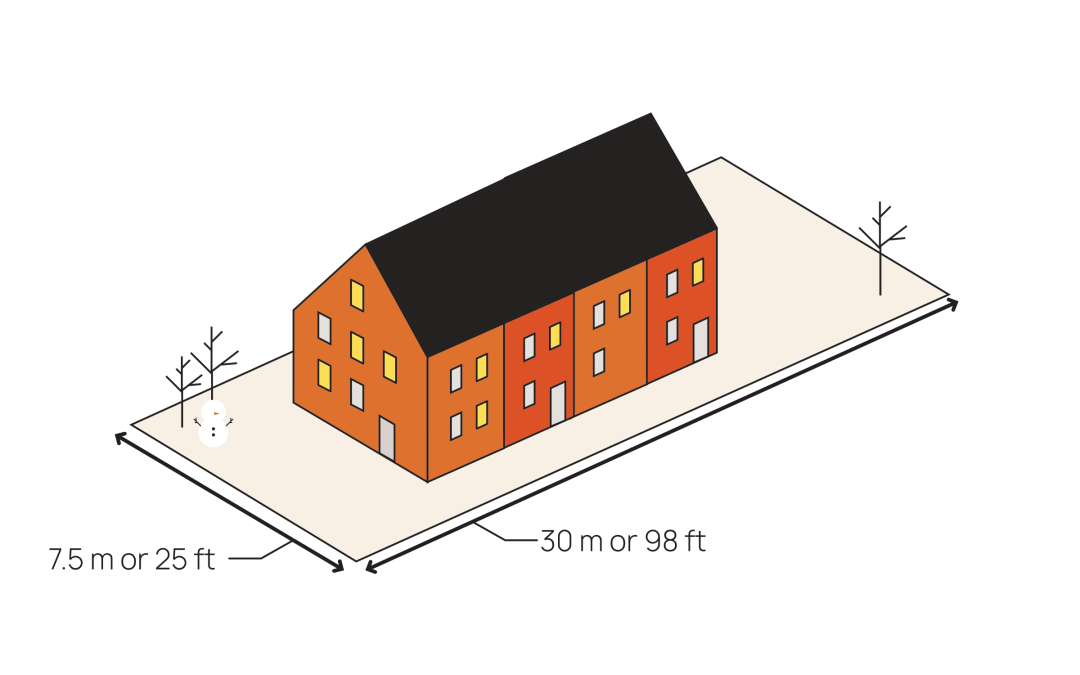
- at least 7.5 metres wide
- at least 30 metres deep
These apply across the board — it doesn't matter whether you're building a single detached house or an 8-unit apartment.
Density
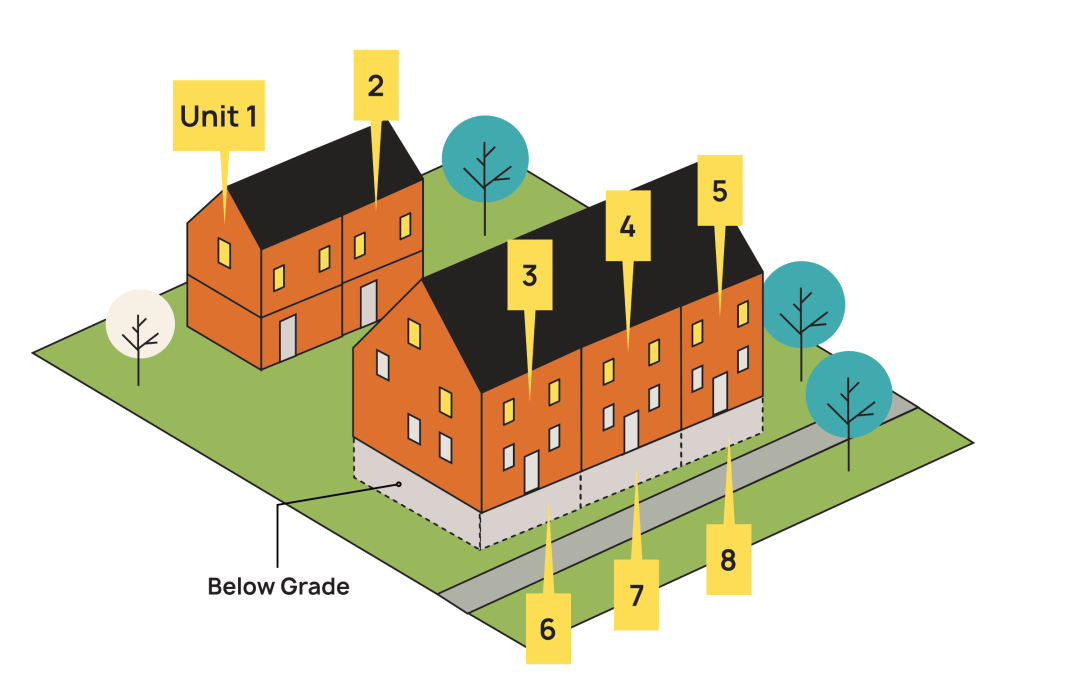
Density in the RS zone is simple: you need 75 m² of site area per unit. The more land you have, the more units you can build (unless your lot has a density cap — more on that below).
So, for example:
- On a 225 m² lot (the minimum site size), you can build up to 3 units.
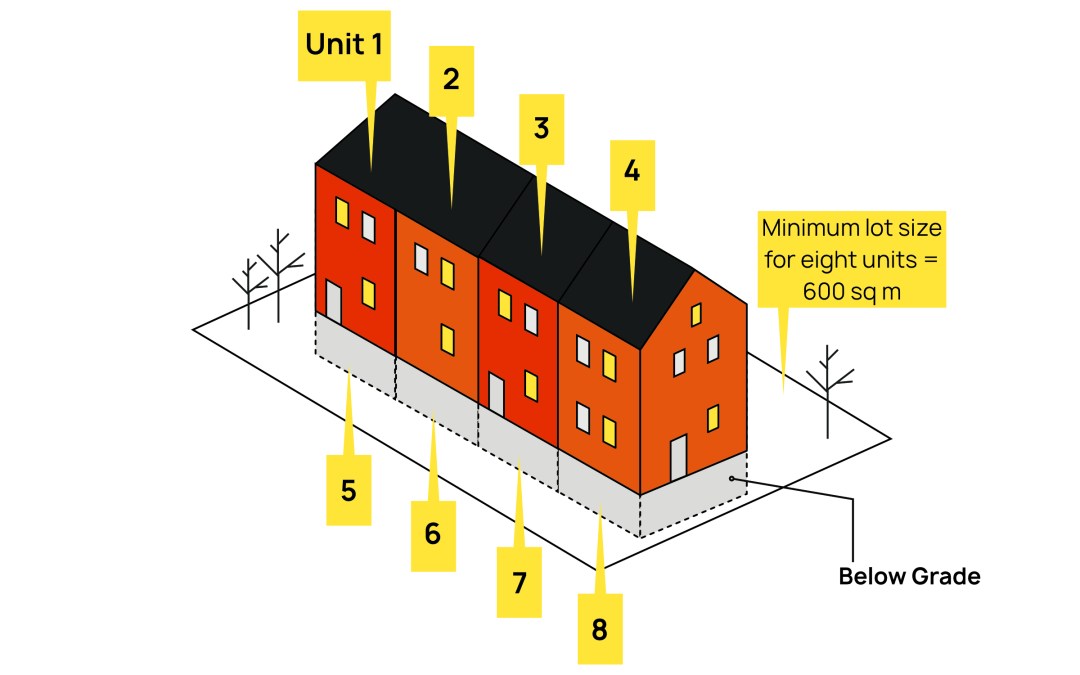
- On a 600 m² lot, the maximum allowed is 8 units.
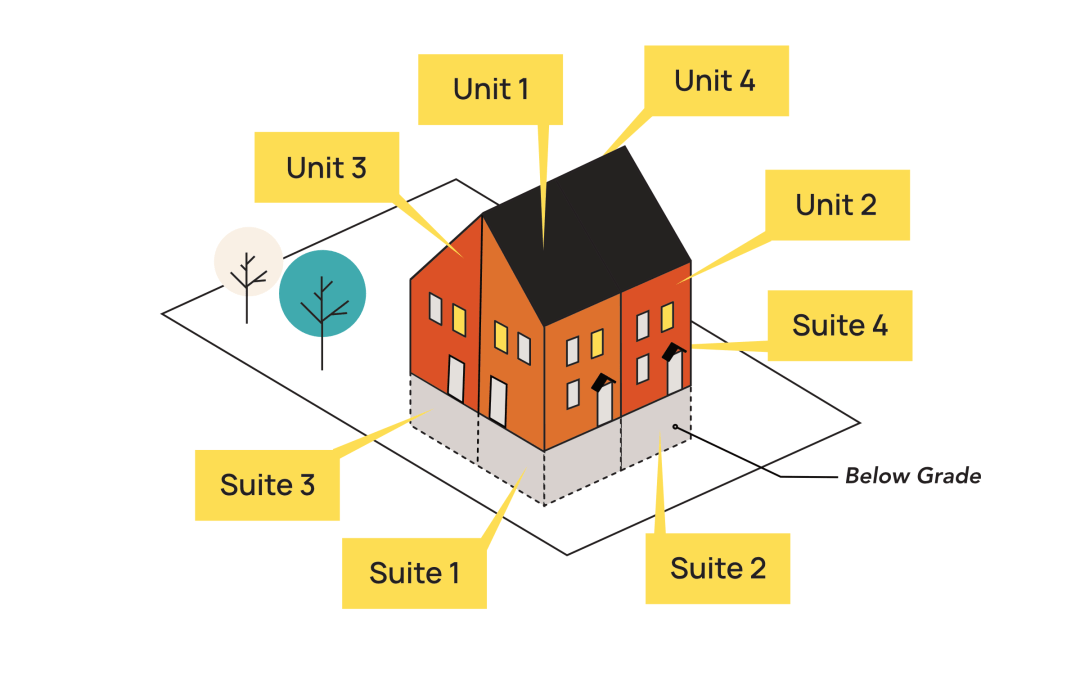
One thing worth knowing: basement suites, garden suites, and row house units all count the same toward your total. A suite isn't a bonus — it's just another unit in your density calculation.
On a 600 m² site with 8 units to work with, there are a lot of ways to play it:
- A 4-unit row house with 4 basement suites (a classic Edmonton infill combo)
- A 3-unit row house with 3 basement suites and 2 garden suites
- An 8-unit apartment building
- Two semi-detached houses, each with a basement suite
- Stacked or cluster housing
There is a cap to keep in mind, though. On non-corner sites, 8 units is the ceiling — no matter how large the lot is. Corner sites aren't subject to this cap, so larger corner lots can go beyond 8 units.
Pro tip: If you have a large mid-block site, a strategic subdivision could unlock more density. It's worth running the numbers.
Building Size
You know how many units you can fit. Now let's talk about how big those buildings can actually be. Three things control this: site coverage (how much of your lot the building can occupy), setbacks (how far the building must sit from your property lines), and height.
Site Coverage
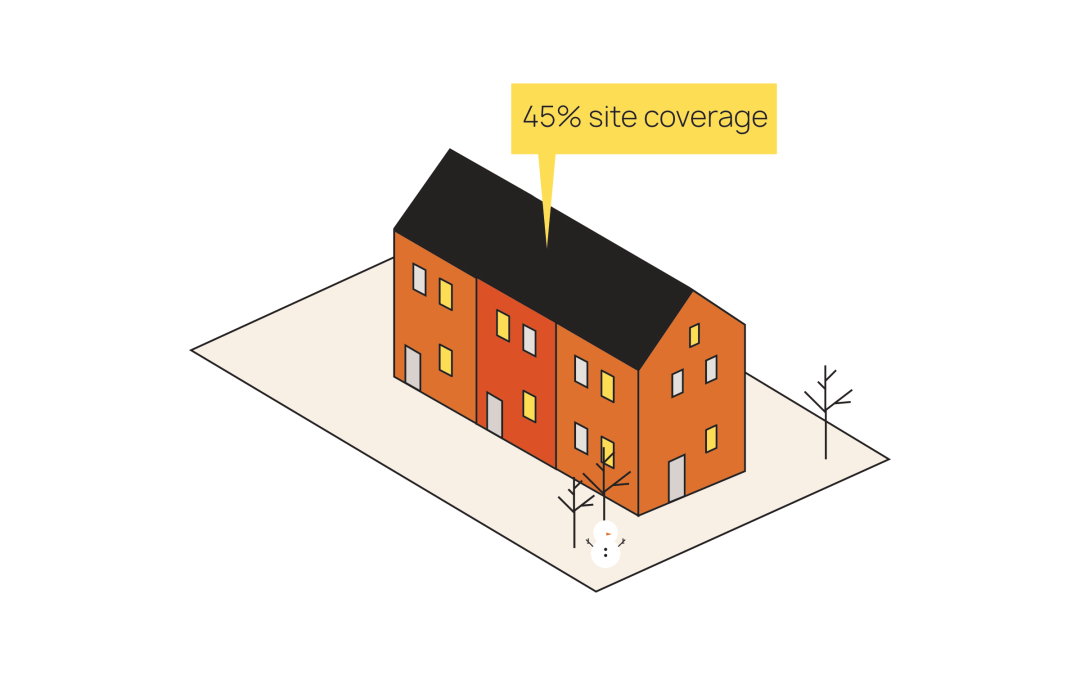
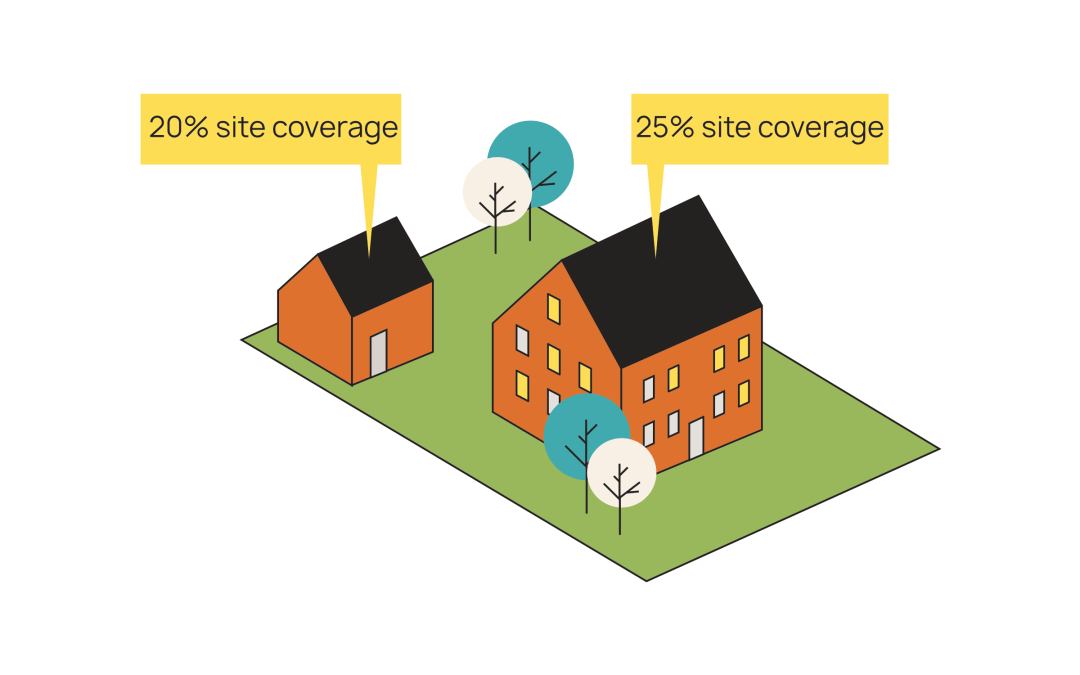
The RS zone allows a maximum total site coverage of 45% — but there's a catch. Only 20% of your site can be used for backyard housing (think garden suites or laneway homes). So if you're planning to build one, you'll need to divide that 45% thoughtfully between your main building and anything at the back.
Here's a practical example: if your main building uses the full 45%, there's nothing left for a garage or backyard home. You'd need to rely on uncovered parking instead — which is allowed, just worth planning for upfront.
Setbacks & Building Length
Setbacks determine how close your building can get to the edges of your property. Here's the vocabulary:
- Front setback — distance from your building to the front property line
- Rear setback — distance from your building to the back property line
- Side setbacks — distance from the sides of your building to the side property lines
On corner lots, side setbacks split into two:
- Interior side setback — the side facing your neighbour
- Flanking side setback — the side facing the street
One thing that catches people off guard on corner lots: the "front" of your property is always the shorter of the two street-facing property lines — not necessarily the side your front door faces.
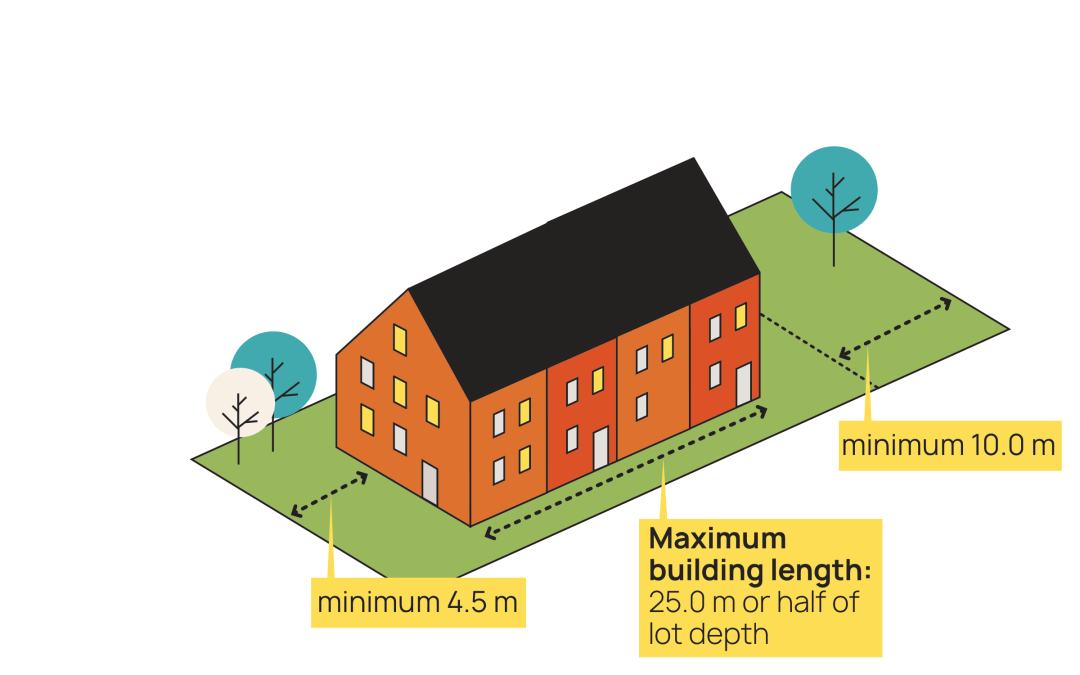
The front and rear setbacks in the RS zone are more simple:
- Minimum front setback: 4.5 m
- Minimum rear setback: 10.0 m
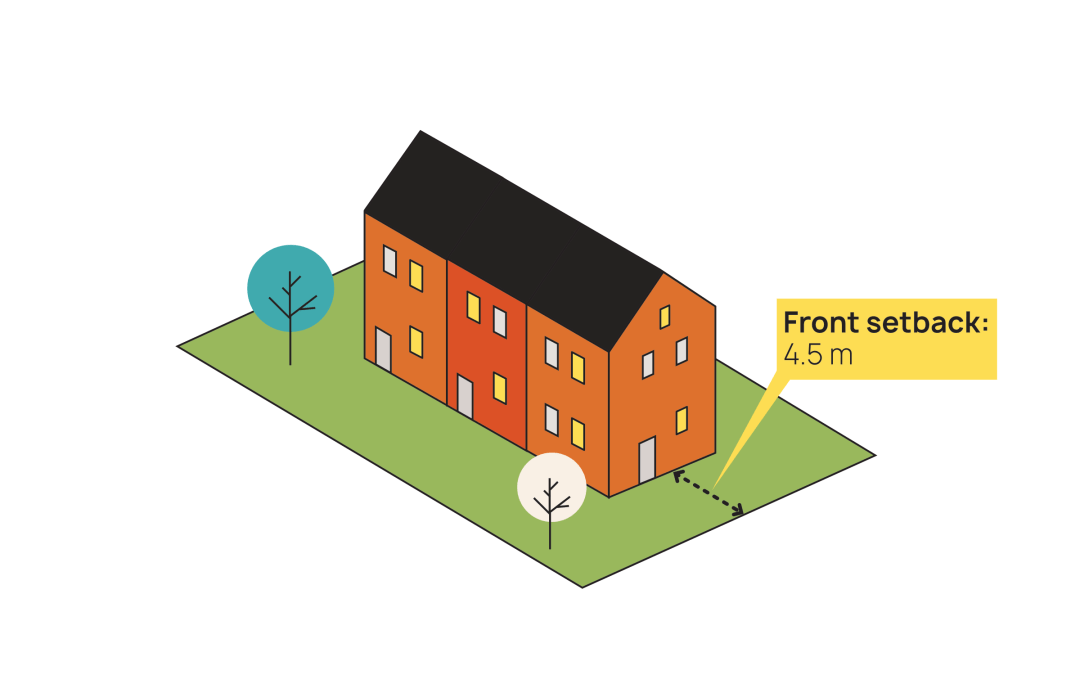
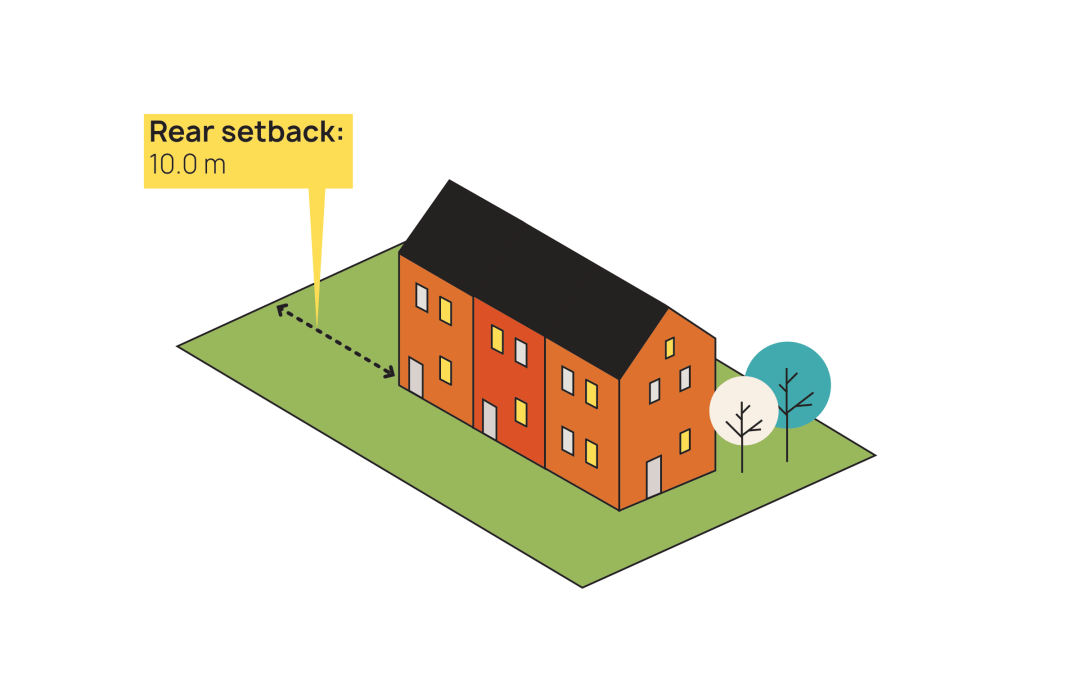
Side setbacks are where things get a little more nuanced. On non-corner sites:
- For single detached, semi-detached, and row or multi-unit housing where all entrances face the front: 1.2 m on each side
- If you're building row or multi-unit housing and any entrance faces the side property line, that side setback increases to 1.9 m
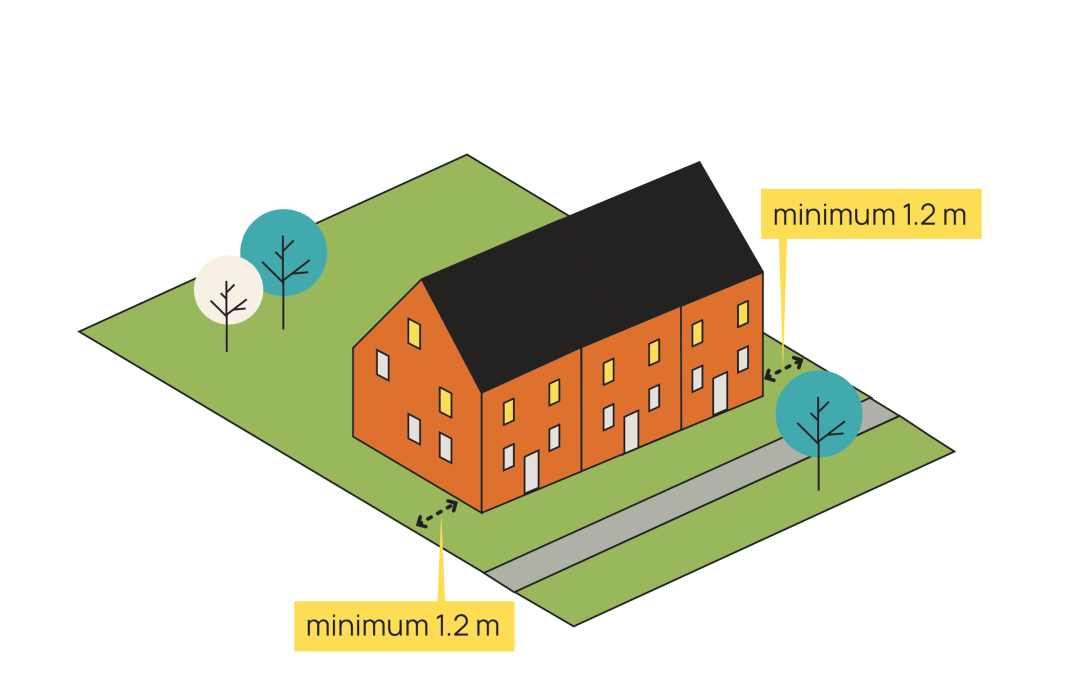
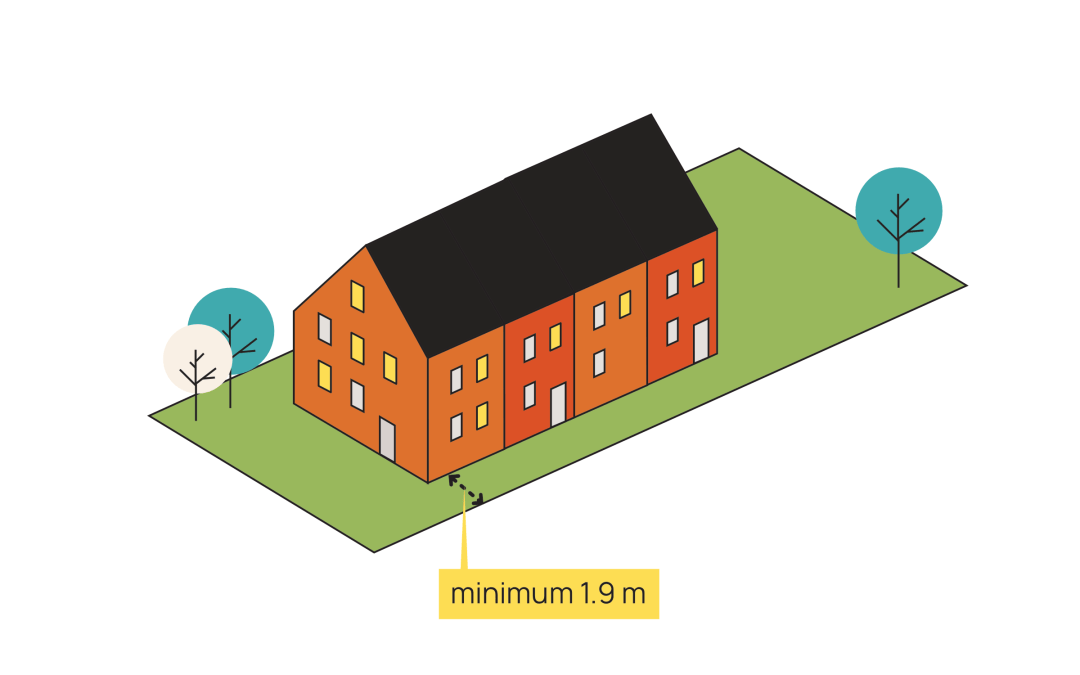
On corner sites, the interior side setback stays at 1.2 m. The flanking side setback is 1.2 m too — unless a main entrance faces the flanking side, in which case it bumps up to 2.0 m.

Even if your setbacks technically allow for a long building, there's a hard cap on length. In the RS zone, the maximum building length is the lesser of:
- 25.0 m, or
- 50% of your lot depth
Side Entrances
As of July 8, 2025, there's a limit on how many unit entrances can face an interior side lot line: maximum two.
This also has setback implications. Any entrance facing an interior side lot line triggers the 1.9 m setback on that side — so in practice, many mid-block row house projects will need that larger setback on both sides. The entrances that trigger this additional setback are both main entrances or front doors, as well as entrances to mechanical rooms.
Height
The maximum building height in the RS zone is currently 10.5 metres — enough to comfortably build three storeys. That said, Council has approved a reduction to 9.5 metres, taking effect August 1, 2026. If you're in the design phase right now, it's worth knowing which limit will apply to your project. (See the transition cut-off dates at the top of this article.)
One more thing: development officers cannot grant a variance on height. Whatever the maximum is when your permit is reviewed, that's your ceiling — full stop.
Other Important Regulations
Driveways & Garages
If your property backs onto an alley, your garage needs to be at the back — no front-facing driveways or garages allowed. This applies even if you're replacing an older home that had a front garage. You'll need to remove the existing driveway, rebuild the curb, and put the new garage in the rear. Plan for this early — it affects your site layout and budget. The only way around this regulation is typically to wait for a permit to be refused and then to appeal it to the Subdivision and Development Appeal Board.
Secondary Suites & Backyard Housing
One of the best things about the RS zone is how flexibly you can mix housing types. Here's a quick primer on the two unit types that tend to cause the most confusion:
- A secondary suite is a unit inside the main building — typically in the basement, but not always.
- A backyard house is a separate unit in the backyard. It can be attached to a garage (beside or above it) or a standalone building.
You can have both on the same site — just make sure you're not exceeding your total unit count. Secondary suites are permitted in single detached, semi-detached, and row housing. Backyard houses are permitted alongside any housing type.
One important caveat: secondary suites and backyard houses can't be separated from the main home through subdivision or condo conversion. If you want to subdivide or condo your units, they all need to be principal units. Check in on building code and servicing requirements too — they can affect what's feasible.
Commercial Uses
Here's one that surprises a lot of people: the RS zone actually allows commercial uses — things like cafes, medical offices, retail stores, and professional offices. The catch is that your site needs to be adjacent to a commercially zoned property. It's a narrow window, but it's there.
Thinking about redeveloping your property? We can help!
There's a lot you can do in the RS zone — and a lot of details that can trip up even experienced builders. If you'd like a clearer picture of what's possible on your specific site, we offer Development Strategy Reports that assess your property against current regulations and lay out potential development scenarios, key considerations, and the pros and cons of each option.
We can also manage your permit drawings and development permit application for small-scale multi-unit housing — row housing, stacked row housing, garden suites, and more. And if what you're looking to build falls outside what the RS zone allows, we can help you navigate a rezoning too.
Let’s Talk About Your Project
Curious how this could apply to your situation? Let’s have a quick conversation and explore what’s possible.
If You’re Building More Housing, You Deserve a Smooth Approval
Our cities need more housing, and we don’t think anything should stand in the way. Book a call and let’s map the fastest path to yes.