Edmonton Design Committee (EDC): A Guide to the Review Process
August 25, 2025
If you’re applying for a development permit or rezoning in Edmonton, your project may need to go before the Edmonton Design Committee (EDC). The EDC is an advisory group that reviews projects for design quality and fit within their surroundings before they move forward in the approval process.
So—what does that mean for you as an applicant? Here’s a clear guide to what the EDC does, when your project might be sent to them, and how to prepare for review.
What Is the Edmonton Design Committee?
The EDC is made up of up to 12 members, appointed by City Council. Members come from:
- Professional organizations such as the Alberta Professional Planners Institute and the Alberta Association of Landscape Architects
- The development industry
- Post-secondary institutions
- The public, through citizen recruitment
The committee meets twice a month to look at projects and consider questions like:
- How will the building look?
- How will it fit into the surrounding neighbourhood?
- How will people experience the space once it’s built?
When Does a Project Go to the EDC?
Not every project is reviewed. The EDC typically reviews:
- Development permits → If your site is inside the EDC’s boundaries (see map), your project will be sent for review.
- Rezoning applications → If your site is one hectare or larger and within 400 metres of an LRT station or transit centre, or it’s inside the EDC’s boundaries, it will be reviewed.
Projects that usually don’t go to EDC review include:
- Small-scale residential developments (single detached, semi-detached, some row houses)
- Small commercial projects (site area under 1,500 m² and under two storeys)
- Storefront updates that don’t change the size or location of doors and windows
- Simple rezoning changes that only add or remove a use
- Rezonings to standard zones
Applicants can also ask for an exemption, but the decision is up to the file planner and, ultimately, the committee.
How the EDC Review Process Works
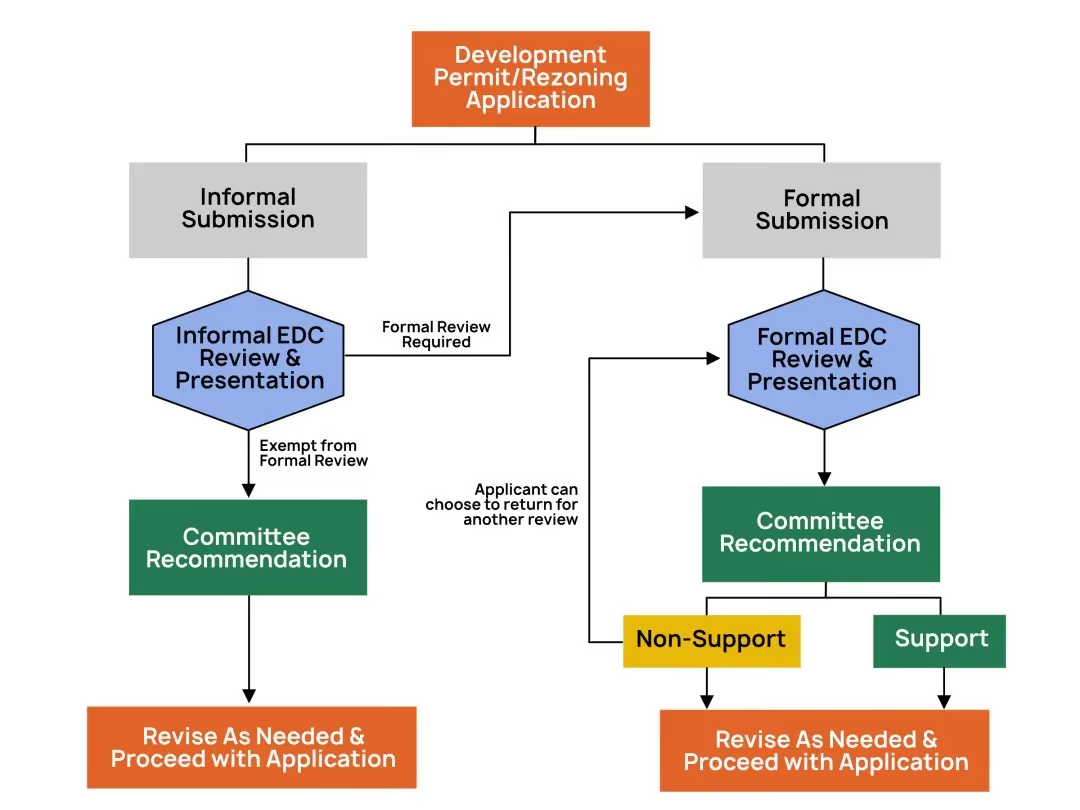
There are two main types of review:
- Informal review – An early look at a preliminary design. If the committee feels you are on track, they might waive the need for a formal review.
- Formal review – A detailed look at your final design, similar to what you submit for a development permit.
Applicants can choose to do an informal review first, or go straight to a formal review when applying for rezoning or a development permit.
What to Include in Your EDC Submission
A strong submission package usually includes:
- Basic project details -> Height, number of units, parking, address, lot size, zoning, and a quick description of the site.
- Project design analysis ->The big-picture explanation of your project including goals, how it aligns with City plans and zoning, community feedback, and how the design responds to the site and neighbourhood.
- Design narrative ->Illustrated story of your project, including renderings, elevations, 3D views, shadow studies, landscaping, and other visuals that bring the design to life.
Presenting to the Committee
At a formal review, you’ll have up to 10 minutes to present your project. Members of the public can also speak (up to 5 minutes each). After presentations, the committee will ask questions, deliberate and vote on whether they support the project.
What the EDC Decision Means
The committee’s recommendations are advisory only—they don’t approve or reject projects. Instead, they provide input to City Administration or Council, who make the final call.
- Support → Your design works as presented (with only small changes, if any).
- Non-support → The committee suggests major changes. Administration or Council may require revisions before moving forward.
If the committee does not support your project, it’s usually best to revise your plans. After making changes, you can either return to the EDC for another review or move forward without going back. Keep in mind, skipping a return review may mean losing support from Administration or facing tougher questions at Council.
How Situate Can Help
If your project is headed to the Edmonton Design Committee, preparation is key. At Situate, we know what the committee looks for and how to position your project for success. From deciding if review is likely, to crafting a strong submission, to presenting with confidence, we guide you through the process from start to finish.
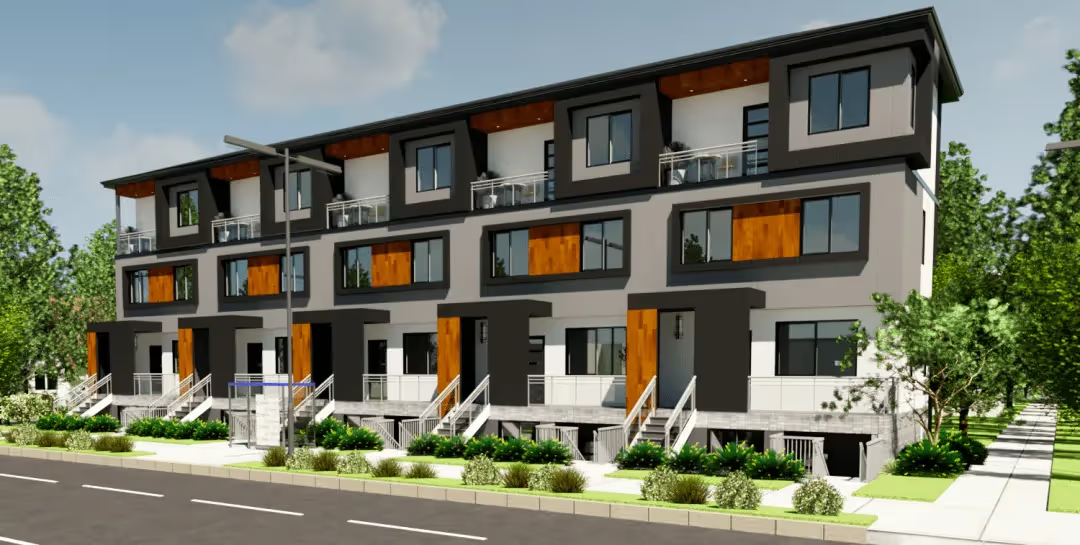
We’ve helped plenty of projects like the one above shine at EDC—and we’d love to help yours do the same. Let’s chat.
FAQs About the Edmonton Design Committee
Do all projects go to the EDC?
No. Only projects within the boundaries or meeting certain size/criteria are sent for review.
What does the EDC look for?
Design quality, neighbourhood fit, and how the project aligns with City plans and urban design principles.
Can the EDC reject my project?
No. The committee’s recommendations are advisory only—final decisions rest with City Administration or Council.
How can I prepare for an EDC review?
By submitting a strong design package, telling the story of your project, and anticipating questions about fit, design quality, and community impact.
Let’s Talk About Your Project
Curious how this could apply to your situation? Let’s have a quick conversation and explore what’s possible.

If You’re Building More Housing, You Deserve a Smooth Approval
Our cities need more housing, and we don’t think anything should stand in the way. Book a call and let’s map the fastest path to yes.