MLI Select Explained: Better Financing for Multi-Unit Housing
June 11, 2025
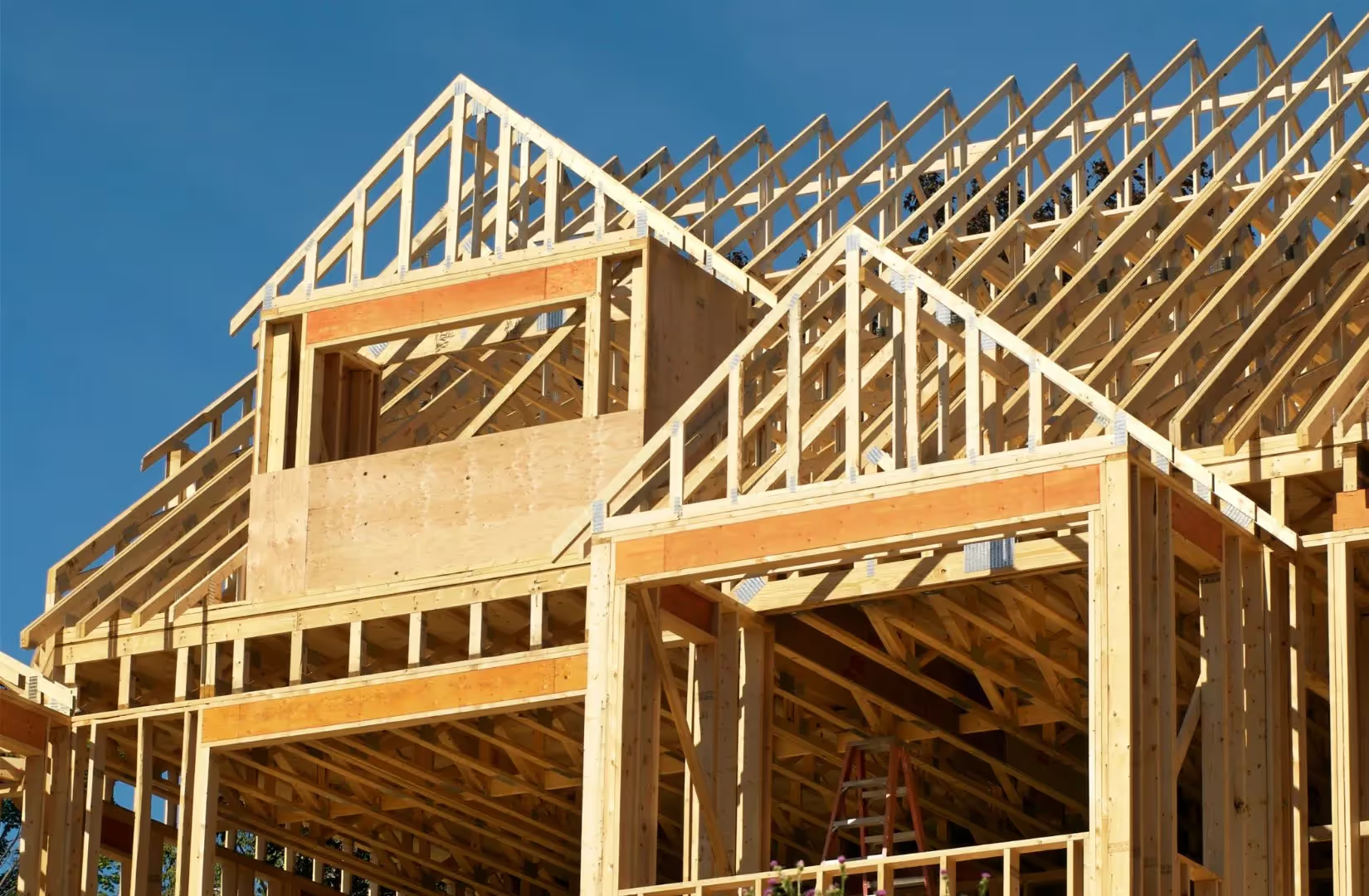
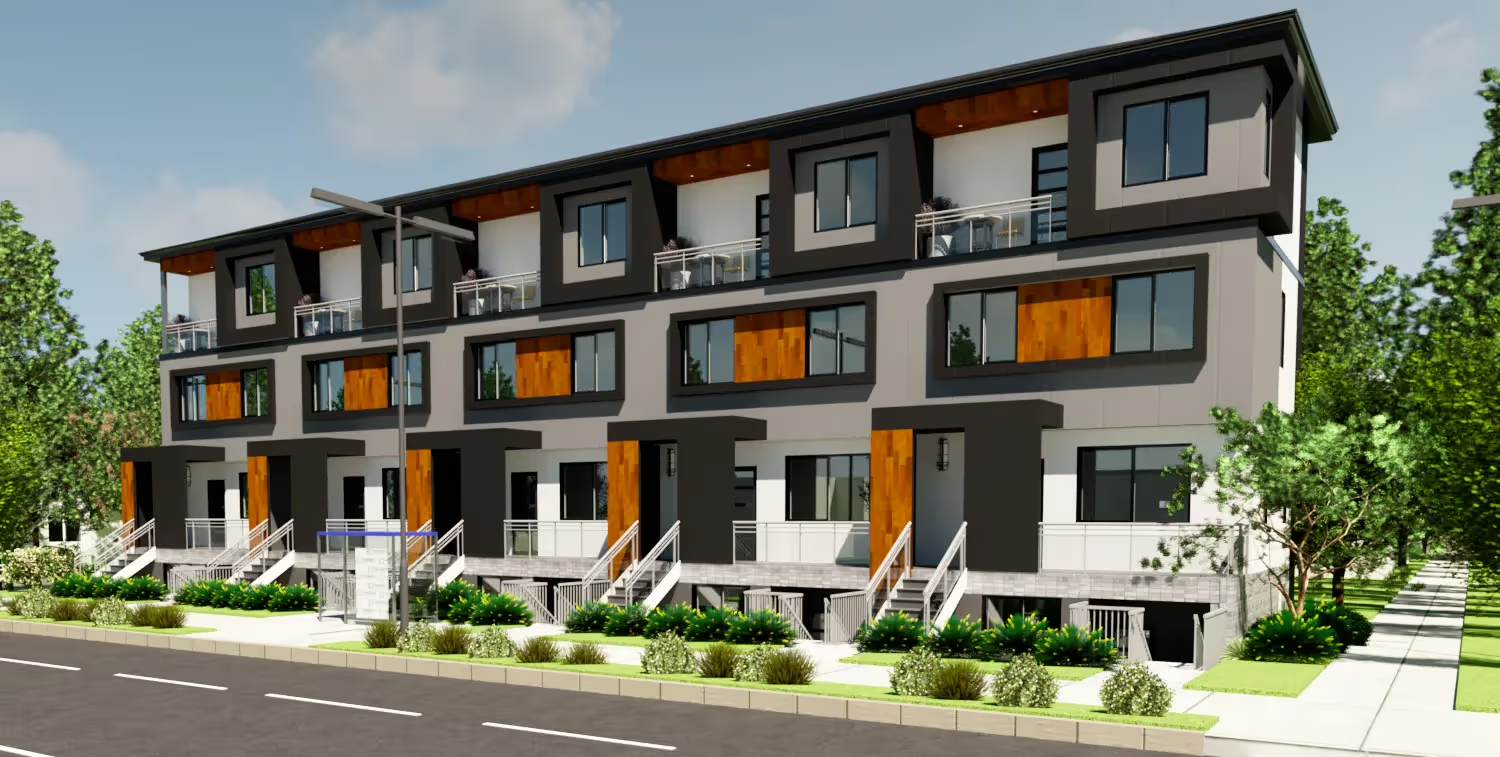
Thinking about building rental housing—a row of townhouses, a sixplex, or maybe a small apartment building? Whether you’re new to this or have a few projects under your belt, figuring out how to pay for it is often the trickiest part.
That’s where MLI Select comes in.
MLI Select is a mortgage insurance program from CMHC (Canada Mortgage and Housing Corporation) that helps people get better financing for rental housing if they commit to making it more affordable, energy efficient, or accessible.
At Situate, we help a lot of clients who are using this program to make their projects work—especially those doing infill in Edmonton. Here’s a straightforward guide to how MLI Select works, how you can qualify, and what kind of benefits you get.
What is MLI Select?
MLI Select gives you access to better mortgage terms for multi-unit rental projects. If your project meets CMHC’s criteria, you can:
- Borrow up to 95% of your total costs
- Stretch your mortgage over 40 to 50 years, so monthly payments are lower
- Pay less up front for mortgage insurance
In short, it’s a program designed to support housing projects that contribute to social outcomes—like affordability, energy efficiency, and accessibility.
Who Can Use It?
Anyone planning to build or renovate five or more rental units can use MLI Select. This includes:
- Row housing, townhouses with suites, or stacked townhomes
- Small-to-medium apartment buildings
- Mixed-use or supportive housing projects
If your project has five or more units, and you’re planning to rent them out, you may be eligible.
How Do You Qualify?
To qualify for MLI Select, your project needs to earn at least 50 points from any combination of three categories: Affordability, Energy Efficiency, and Accessibility. The more points you earn, the better your loan terms will be.
1. Affordability (up to 130 points)
This is based on how many units are rented at affordable levels and how long you commit to keeping them that way.
For new buildings:
- 50 points: At least 10% of units are rented at or below 30% of the median renter income for your area
- 70 points: At least 15% of units at or below that threshold
- 100 points: At least 25% of units at or below that threshold
While you are required to maintain affordability for a minimum of 10 years from the date of first occupancy, If you commit to keeping rents affordable for 20 years or more, you get an extra 30 points on top.
2. Energy Efficiency (up to 50 points)
This is based on how energy-efficient your building is compared to minimum building code.
For new construction:
- 20 points: 20% better than code
- 35 points: 25% better than code
- 50 points: 40% better than code
If you’re already aiming for a high-performance design—like Step Code, Net Zero, or Passive House—you’re probably well-positioned to get the full 50 points here.
3. Accessibility (up to 30 points)
This measures how well your building accommodates people with mobility or other accessibility needs.
- 20 points: At least 15% of units are accessible or use universal design, or you achieve Rick Hansen Foundation Certification (60–79% score)
- 30 points: 100% of units use universal design or are accessible, or you achieve Rick Hansen Foundation Gold Certification (80%+ score)
In all cases, your building must be fully visitable, which means people with mobility challenges can enter every unit and use the main floor.
What Do You Get Based on Your Score?
Once you reach 50 points, you’re in—but scoring more points gets you even better loan terms:
- 50 points: Up to 95% financing, 40-year amortization
- 70 points: Up to 95% financing, 45-year amortization
- 100+ points: Up to 95% financing, 50-year amortization + reduced personal liability (CMHC may allow limited recourse)
Even at the entry level, this program can make a huge difference to your project’s budget and cash flow.
Why MLI Select Matters
Getting more flexible financing can make a real difference in whether or not a rental project moves forward. With MLI Select, you may be able to reduce the amount of cash you need up front, lower your monthly payments by extending your mortgage over a longer period, and qualify more easily even if your rental income projections aren’t especially high.
If you’re investing in energy efficiency, it can also improve your long-term profitability by cutting operating costs. For infill housing—like townhomes or small apartment buildings—this can be the key to making the numbers work. For larger multi-unit projects, it can help you deliver more housing at better value, without overextending your financing.
How Situate Can Help
Using MLI Select isn’t just about checking CMHC’s boxes—it also means making sure your project sails through zoning, development permits, and building approvals without unnecessary delays. That’s where we come in.
We’ll help you figure out what’s currently allowed on your site and whether a rezoning might be needed to support your goals. We can also coordinate the design of your project to ensure it meets MLI Select’s affordability, energy efficiency, or accessibility criteria. Once the project is defined, we manage the permit process so everything moves forward smoothly and on time.
Whether you’re just exploring the idea or you’re ready to move forward, we’re here to make the approvals side of your MLI Select project easier.
Thinking about using MLI Select for your next project?
Let’s Talk About Your Project
Curious how this could apply to your situation? Let’s have a quick conversation and explore what’s possible.
If You’re Building More Housing, You Deserve a Smooth Approval
Our cities need more housing, and we don’t think anything should stand in the way. Book a call and let’s map the fastest path to yes.