What Can I Do in Edmonton's MUN Zone?
June 24, 2024
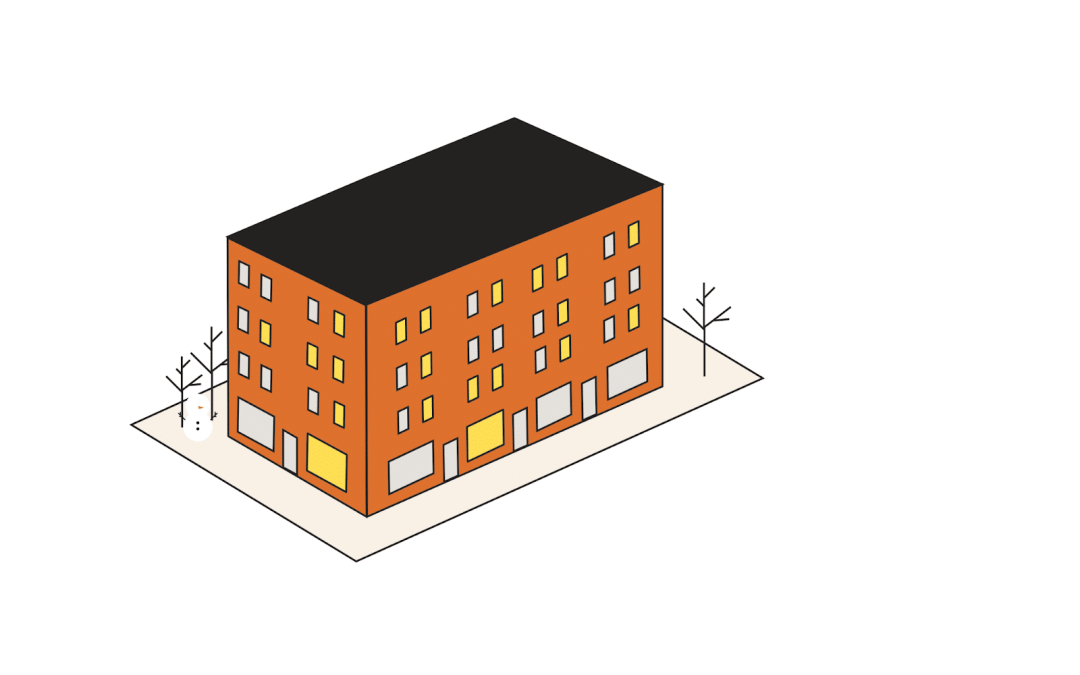
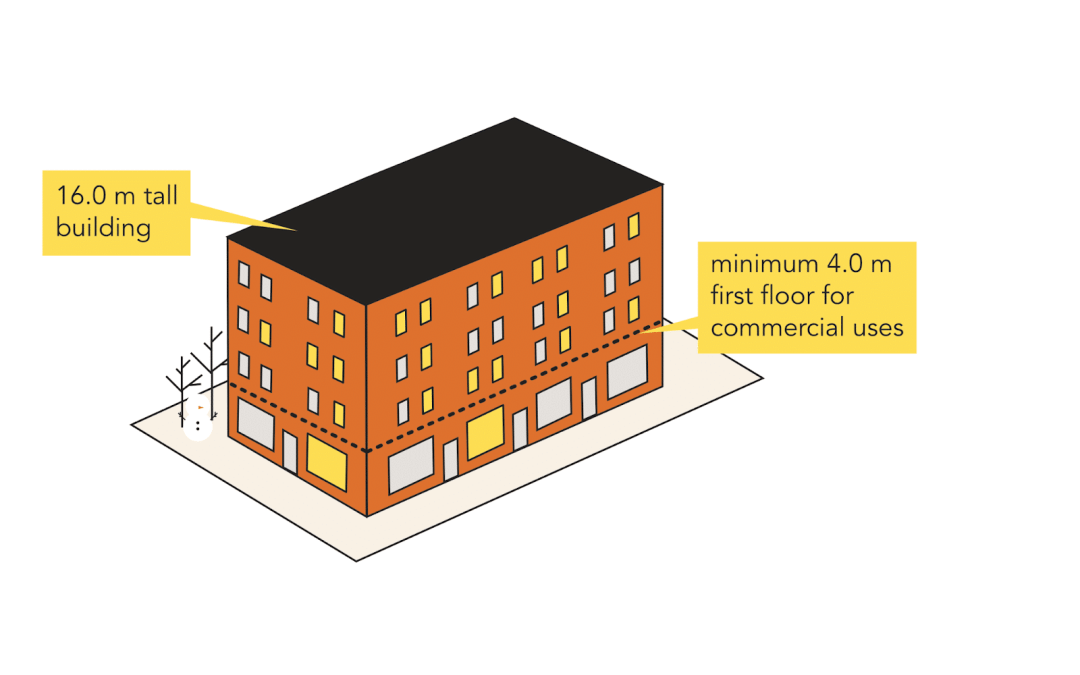
The City of Edmonton has a whole new Zoning Bylaw (Zoning Bylaw 20001) that went into effect in January 2024. We know a lot of people are curious about what the new Zoning Bylaw looks like and what it means for their properties. This article goes through the details of the new MUN (Neighbourhood Mixed Use) zone, which has replaced the CNC (Neighbourhood Convenience Commercial) zone and CB1 (Low Intensity Business) zone on sites that were under the Main Streets Overlay. The new zone allows pedestrian-oriented mixed-use development with a maximum height of four storeys.
Development Types
The MUN zone is meant for mixed-use developments that combine commercial and residential uses in one building. Buildings in a mixed-use development typically have commercial business on the bottom floors and residential units on the upper floors, but the MUN zone allows residential units to be located on the main floor. The MUN zone allows for buildings that exclusively contain commercial uses, but an MUN building can't be only residential.
Floor Area Ratio
The MUN zone uses floor area ratio (FAR) as a way to control the size of buildings. FAR is written as a number that expresses the ratio of a building's maximum floor area to the size of the site it's built on. The maximum FAR in the MUN zone is 3.5.
Calculating FAR is easier than it seems: for example, if you have a 1,600 m² lot with a maximum FAR of 3.5, the maximum floor area for your building would be 5,600 m² (1,600 × 3.5). Just keep in mind that you might not be able to build up to the maximum FAR due to other regulations, such as the maximum building height and minimum building setbacks (this is where a Development Strategy Report can come in handy).
Setbacks
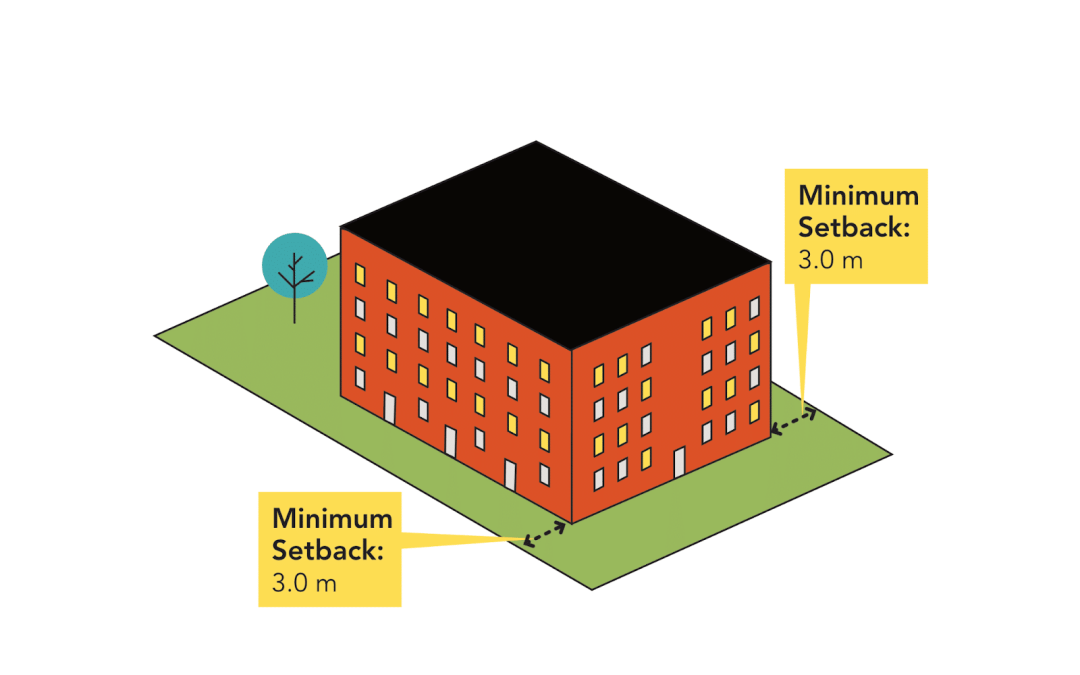
The maximum size of a building is also controlled by setbacks, which determine how much space there needs to be between a building wall and the nearest lot line.
The MUN zone uses setbacks to control the space between the building and streets, alleys, or other lot lines, and the minimum setback depends on whether there are commercial or residential uses on the ground floor.
A building with non-residential uses on the ground floor generally has to be located between one and three metres from the street, with these exceptions:
- Any floor above the main floor can be set back more than three metres from the street (with no maximum distance)
- A distance that's greater than three metres is alright, but only if the space is used for a park, public amenity area, or to retain mature landscaping.
- A distance that's less than one metre is alright, but only if there's an abutting sidewalk that's at least 4.7 metres wide.

A building with residential uses on the ground floor has to be either 4.5 meters from the street, or 3.0 meters when the site abuts a treed boulevard on City property.


There is no minimum setback from an alley in most situations, except the minimum setback is 1.0 metre where the alley is less that 6.0 metres wide.
The minimum setback from other sites is 3.0 metres in most situations. However, there is no minimum setback abutting a site zoned MUN; a vacant site zoned MU, a site in a commercial zone, or a site with a building that's constructed to the shared lot line.
A Few More Regulations…
Okay, phew! If you're still with us after all that, well done. We're on the home stretch now!
Driveways & Parking
If there's an alley behind your site, you can't have a driveway, garage, or parking access facing the street. Vehicle access must be from the back, through the rear lane. Even if your new building replaces an older one that had a front garage, you'll need to remove the driveway and garage, rebuild the curb, and put the new vehicle access in the back.
If your site doesn't have an alley, vehicle access must be from the flanking street for corner sites. The design has to minimize disruption to vehicle and pedestrian circulation, as well as impacts to existing trees and the streetscape.
For buildings that include an above-ground parkade facing a street or a park, the parkade has to be screened from view at ground level and wrapped with other uses with a minimum depth of 8.0 metres.
Landscaping
Landscaping is required to be provided with any new development in Edmonton. Unless you're developing row housing, the landscaping requirements are one tree and two shrubs for each 30 m2 of setback area. For row housing, one tree and four shrubs are required per principal unit.
Amenity Area
Developments in Edmonton with more than eight residential units have to provide an amenity area of at least 7.5 square metres per unit. Amenity area is a place for people to hang out outside of their dwelling unit, and it can be provided indoors or outdoors, and either privately or in common. This can include private balconies, rooftop gardens, or common indoor spaces like gyms or lounges. Amenity areas for apartment buildings are most commonly provided through private balconies, though amenity area can also be provided in a yard, a rooftop terrace, or common indoor space like a gym or party room. Amenity area is not required for commercial uses.
Conclusion
We hope this article has given you an idea of the possibilities that the MUN zone offers. If you're looking for more detailed information on what you can do with your property, we're here to help. Our Development Strategy Report service can assess your site against applicable policies and regulations, and provide you with key considerations, site plan scenarios, and pros and cons associated with potential (re)development options.
We offer a range of services to help you make the most of your property. If you have a property in a different zone that you think the MUN zone would work well for, we can help you rezone—check out our services here!
Let’s Talk About Your Project
Curious how this could apply to your situation? Let’s have a quick conversation and explore what’s possible.
If You’re Building More Housing, You Deserve a Smooth Approval
Our cities need more housing, and we don’t think anything should stand in the way. Book a call and let’s map the fastest path to yes.