What Can I Do in Edmonton's MU Zone?
November 14, 2024

Introduction
Edmonton’s new Zoning Bylaw 20001 came into effect in January 2024. As the city continues to evolve, property owners are still getting familiar with the opportunities and changes brought by this new bylaw. One of the biggest updates was the introduction of the MU (Mixed Use) zone, which now replaces several older zones, including CNC, CSC, CB1, CB2, CO, CB3, and TMU, in areas designated as nodes and corridors.
If you’re wondering what this means for your property and future development plans, you’re not alone. In this article, we’ll break down what you can build in the new MU zone, how to navigate its regulations, and the exciting possibilities it opens up for mixed-use projects.
What Can I Do Under Edmonton’s MU Zoning?
The MU zone is all about flexibility. It’s designed to support a wide range of development types, from purely commercial buildings to mixed-use projects that blend shops, offices, and residential units. Whether you’re looking to develop a trendy café with apartments above or a stand-alone office building, the MU zone has you covered.
Let’s dive into the details of what you can build:
- Mixed-use developments: Typically feature commercial uses on the lower floors and residential units above.
- Exclusively commercial or residential buildings: Also permitted, giving you the flexibility to develop according to market needs.
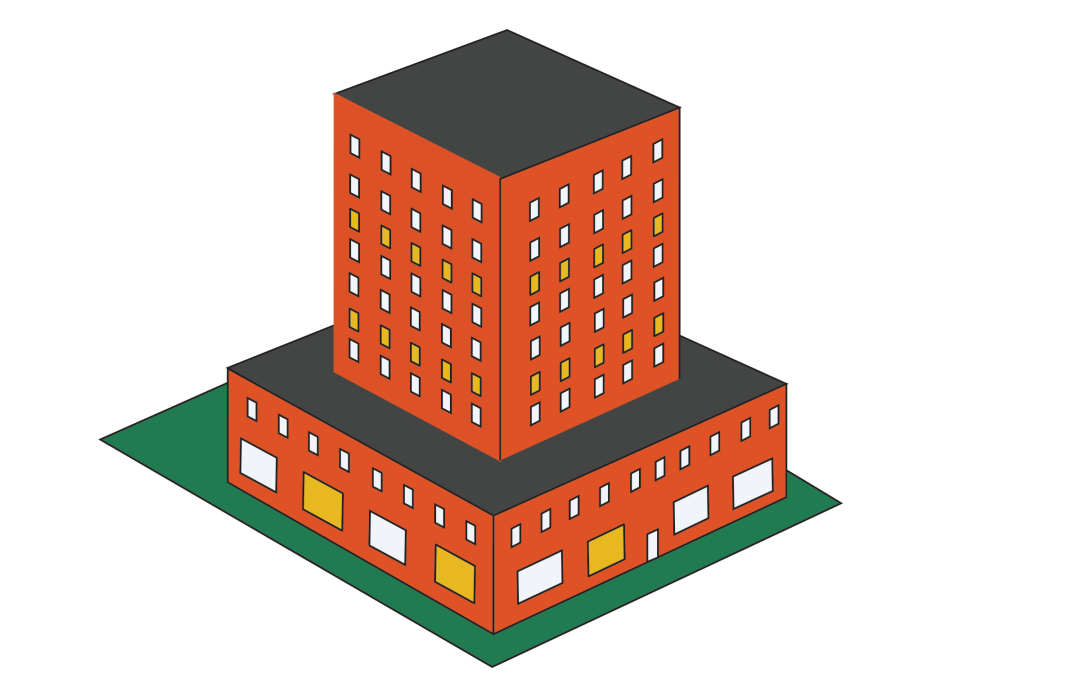
Commercial Uses
The MU zone is ideal for community-oriented spaces, supporting a variety of businesses such as:
- Restaurants, cafés, bars, and retail shops
- Health services, offices, daycares, and schools
- Recreation facilities, hotels, and even libraries
While most commercial uses have no size restrictions, there are two exceptions:
- Custom manufacturing: Limited to 600 m² per establishment.
- Major indoor entertainment: Limited to 500 m² per establishment.
Properties with what’s called a commercial frontage modifier must include commercial uses along the main floor facing the street, ensuring vibrant and active streetscapes.
Understanding Basic MU Regulations: Height, FAR, and Context Modifiers
In the MU zone, density is indirectly controlled through height and floor area ratio (FAR) rather than strict lot size requirements. Let’s break down how this works:
Context modifiers adjust height and FAR based on the area’s character and policy direction:
- The height modifier is shown as “h” followed by the maximum height (e.g., h30 for 30 metres).
- The FAR modifier is denoted by “f” followed by a number (e.g., f3.5 for a maximum FAR of 3.5).
For example, if your lot is 1,600 m² and has an FAR of 3.5, your maximum building area would be 5,600 m². Just remember that other regulations, such as height limits and setbacks, might reduce your buildable area.
The modifiers are completely open-ended under the MU zone. This means that when you apply to rezone a site to the MU zone, the desired height and FAR will need to be determined as part of the application.
Setbacks: Maximizing Space While Staying Compliant
The MU zone uses setbacks to manage building placement and ensure developments are pedestrian-friendly while respecting surrounding properties. Here’s a closer look:
Setbacks from a Street
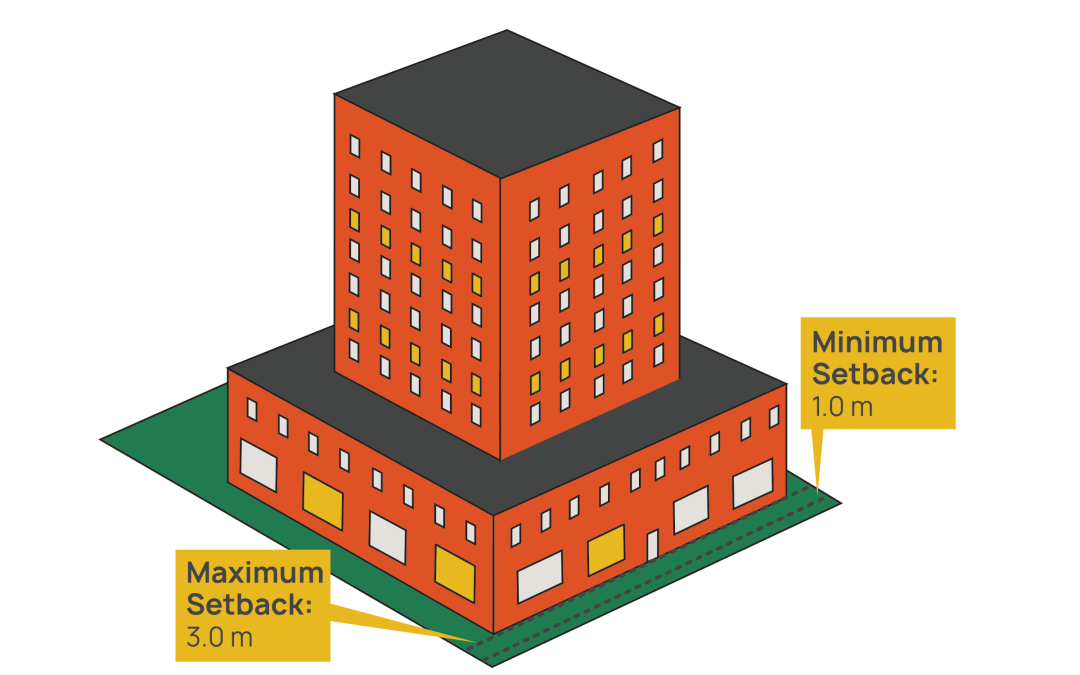
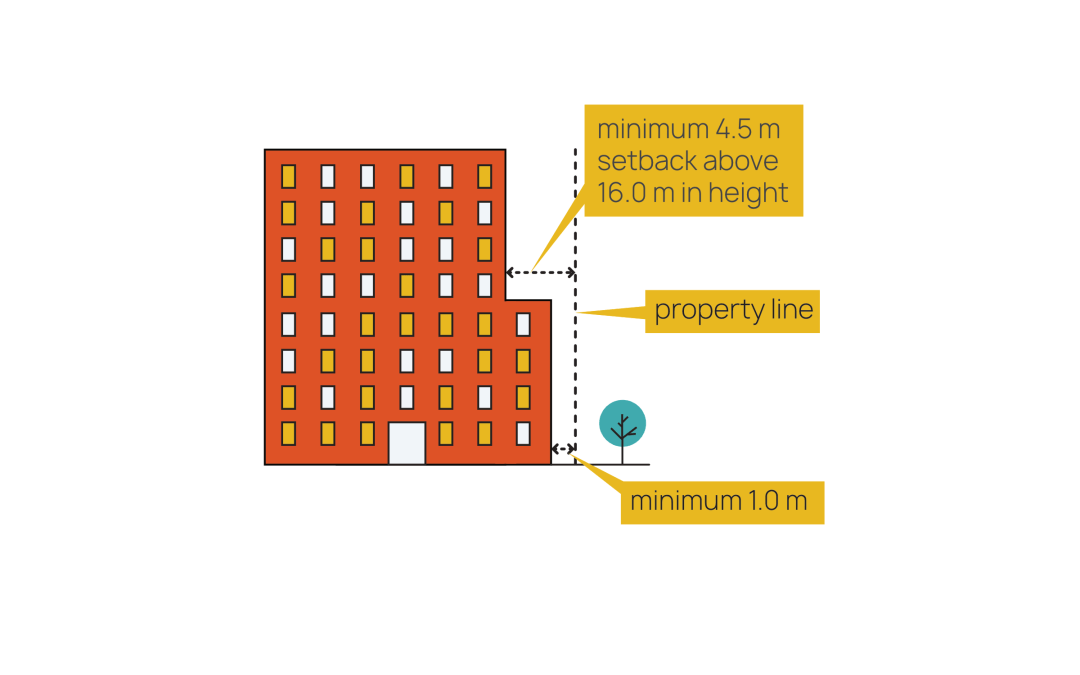
- For buildings with non-residential uses on the ground floor, the setback is typically between 1 and 3 metres.
- Upper floors can be set back more than 3 metres.
- A setback greater than 3 metres is allowed if it’s used for parks, public amenities, or to retain mature trees.
- If there’s an adjacent 4.7 metre-wide sidewalk, you may reduce the setback to less than 1 metre.
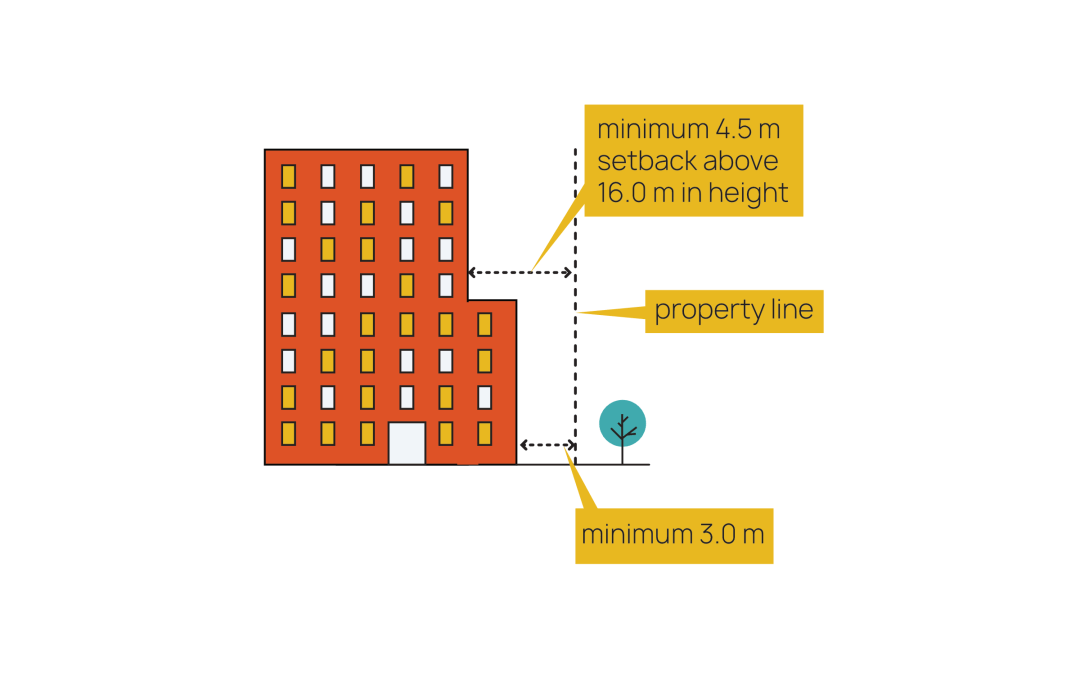
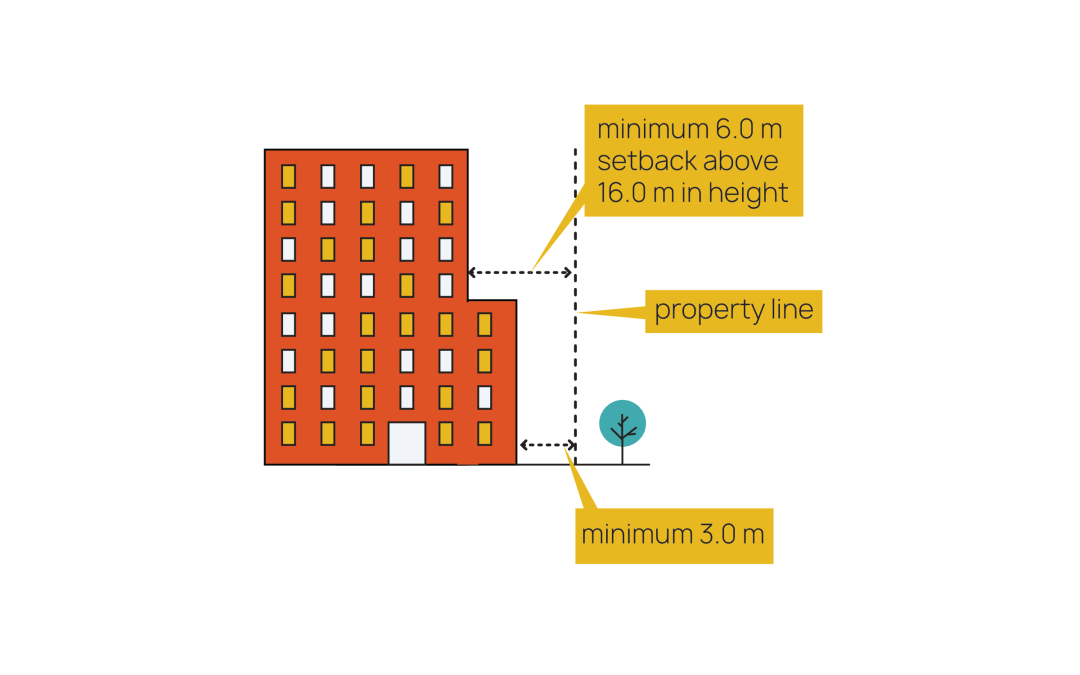
- Portions of the building above 16.0 metres must be set back 4.5 metres from the street.
- For buildings with residential ground floors, the setback is 4.5 metres, or 3.0 metres if the site borders a treed boulevard. Upper floors still need a 4.5 metre setback above 16.0 metres in height.

Setbacks from an Alley
- There’s no minimum setback from alleys, except it’s 1.0 metre if the alley is narrower than 6.0 metres.
- Portions of buildings above 16.0 metres must be set back 3.0 metres from the alley.
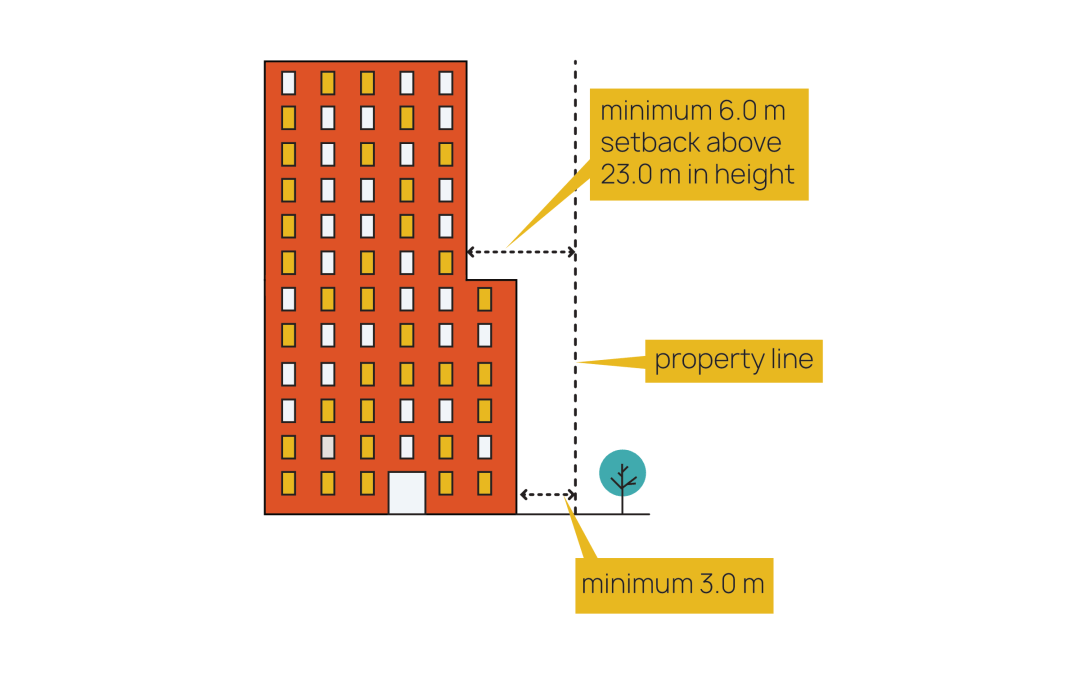
Setbacks from Other Sites
- Buildings generally need a 3.0 metre setback from neighbouring sites.
- Portions of buildings above 23.0 metres must be set back 6.0 metres.
- There’so minimum setback required for portions under 23.0 metres if:
- The neighbouring site is zoned MU or MUN and is vacant.
- The neighbouring site is zoned MU with a commercial frontage modifier.
- The adjacent site is a commercial zone or has a building constructed to the shared property line.
Tower Regulations: Going Vertical in the MU Zone
If your project includes a tower (buildings taller than 28.0 metres), there are additional rules:
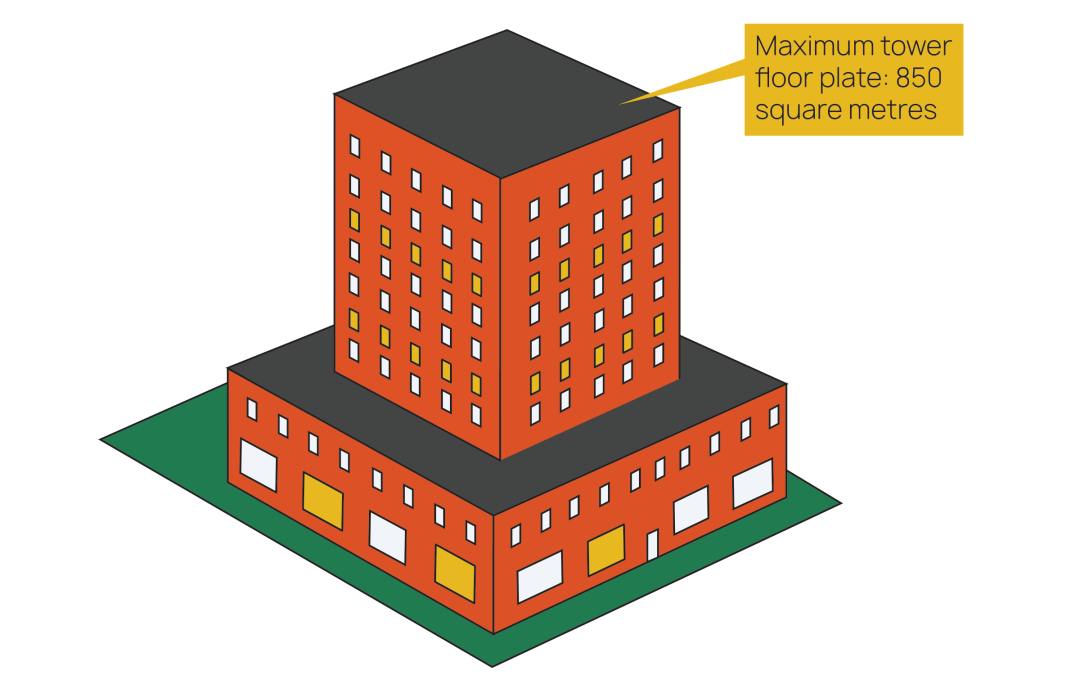
- The maximum floor plate for portions above 23.0 metres is 850 m².
- Towers must be spaced at least 25.0 metres apart, whether on the same site or adjacent sites.
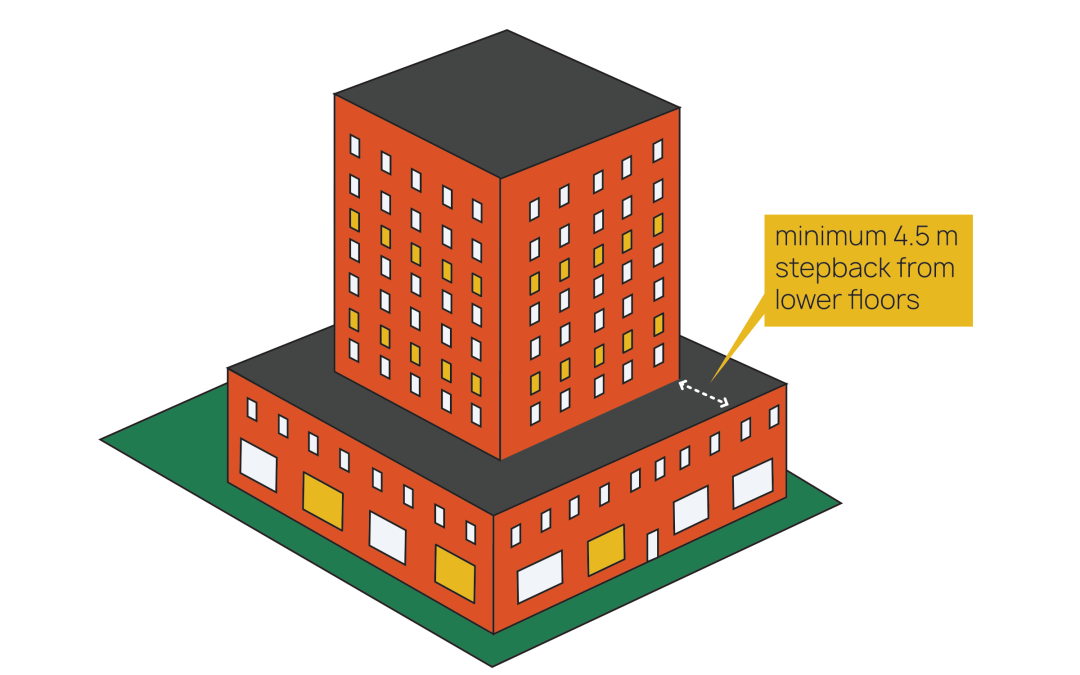
- Towers must be stepped back 4.5 metres from the lower podium floors to reduce bulk.
Driveways, Parking, and Landscaping
In the MU zone, vehicle access and parking need to be thoughtfully integrated:
- If your property has an alley, vehicle access must be from the back—no front-facing driveways allowed.
- Corner sites without alley access must use the side street for vehicle entry, minimizing disruption to pedestrian flow.
- Above-ground parkades facing streets or parks must be screened and wrapped with other uses, ensuring they blend into the streetscape.
Landscaping requirements are one tree and two shrubs per 30 m² of setback area for most developments.
Amenity Area
If your development includes more than eight residential units, you’ll need to provide at least 7.5 square metres of amenity space per unit. Whether it’s a rooftop terrace, a shared garden, or private balconies, these spaces make a difference in creating liveable, attractive environments for residents.
Conclusion
The MU zone is designed to provide maximum flexibility for mixed-use developments, whether you’re planning a commercial, residential, or blended project. Understanding the intricacies of the new zoning regulations can open up exciting opportunities for your property, but it’s not always straightforward.
If you’re looking to navigate the complexities of Edmonton’s new zoning bylaw, our team at Situate is here to help. Our Development Strategy Report service will guide you through every step, ensuring you maximize your property’s potential while staying compliant.
Ready to unlock the possibilities of the MU zone? Contact us today for a free consultation and let’s explore how we can turn your vision into reality!
Let’s Talk About Your Project
Curious how this could apply to your situation? Let’s have a quick conversation and explore what’s possible.
If You’re Building More Housing, You Deserve a Smooth Approval
Our cities need more housing, and we don’t think anything should stand in the way. Book a call and let’s map the fastest path to yes.