How to Get Approved for a Daycare in Edmonton’s Residential Zones
April 15, 2025
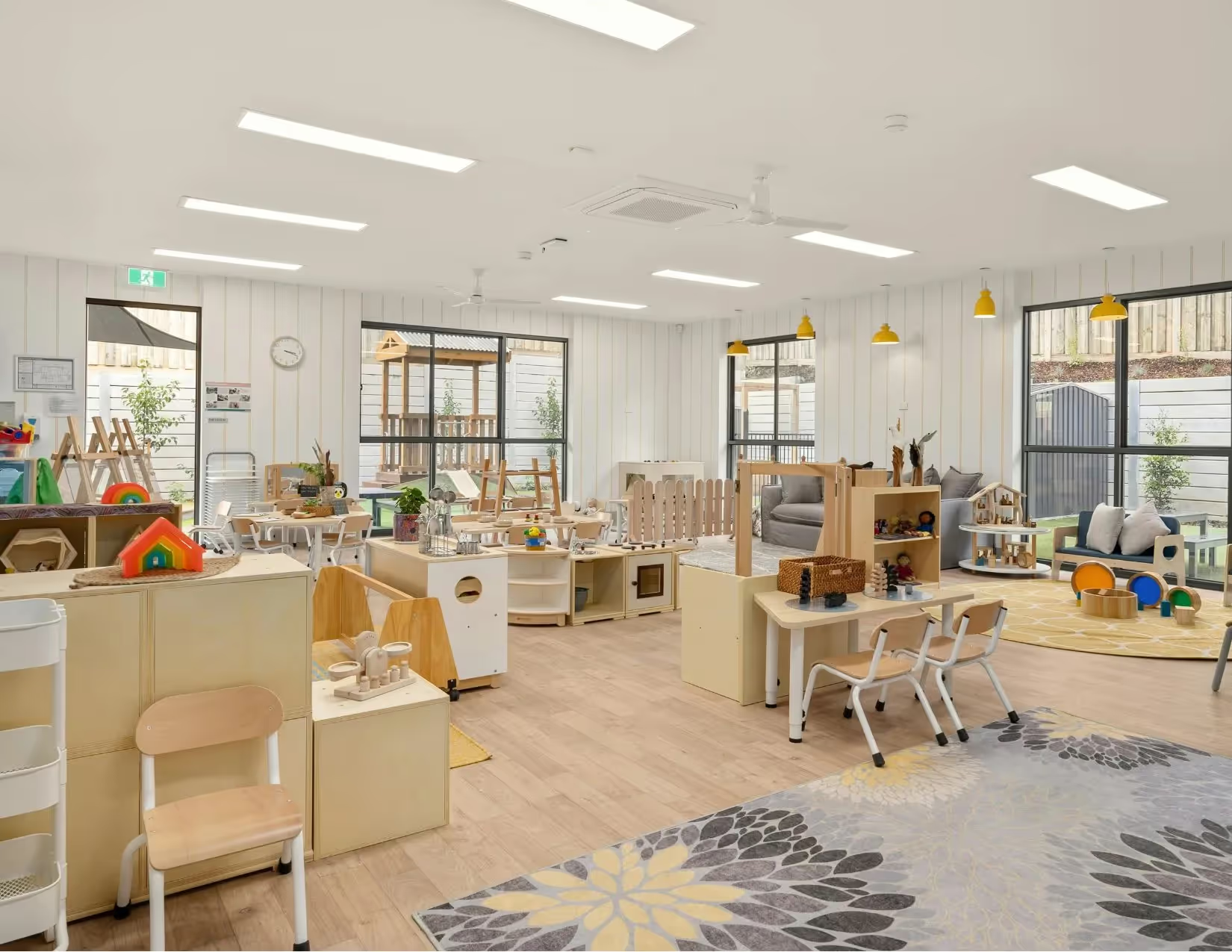
There’s no shortage of families looking for daycare in Edmonton’s residential neighbourhoods—but opening one isn’t always as simple as converting a house or leasing a unit. Even though daycare is a permitted use in all residential zones, Edmonton’s zoning bylaw places some restrictions on where daycares can go and what conditions they have to meet.
If you’re planning to open a daycare—or another commercial use—in an RS, RSF, RSM, RM, or RL zone, here’s what you need to know before applying.
Where Daycares Are Allowed
RS – Small Scale Residential Zone and RSF – Small Scale Flex Residential Zone
These zones cover most low-density neighbourhoods. You can only open a daycare in RS or RSF if the property meets at least one of the following conditions:
- It’s on a corner lot along a busier street (what the City calls a collector or arterial road).
- It’s a corner property where you’re converting an existing single detached house.
- The building is already non-residential, such as a church or office.
- The property is directly next to a commercial or mixed-use site.
If none of these apply, the site likely won’t qualify unless you either apply for a variance or rezone the property.
RSM – Small-Medium Scale Transition Residential Zone
In this zone, daycares are allowed only if the site:
- Is on a corner lot along a higher-capacity street,
- Is in an existing non-residential building, or
- Is directly next to either a commercial site or a residential property zoned for buildings 16 metres (about four storeys) or taller.
Again, if your property doesn’t meet one of these criteria, you may need to request a variance or proceed with rezoning.
RM & RL – Medium and Large Scale Residential Zones
These zones allow apartment buildings and other higher-density housing types. They’re also the most flexible for daycares—there are no location-based restrictions. You don’t need to be on a corner lot, near a main road, or adjacent to commercial uses.
As long as your site meets the general development regulations and is designed appropriately, daycare is a permitted use.
Maximum Floor Area
A maximum floor area of 300 square metres per site applies only in the RS and RSM zones. This includes everything inside: classrooms, staff space, kitchens, and indoor play areas.
There is no size limit for daycare facilities in RM or RL zones under the zoning bylaw.
Outdoor Play Space Requirements
Daycares must provide outdoor play areas that are:
- Separated and screened from nuisances like garbage bins, mechanical exhaust, parking lots, or storage areas.
- At least two metres away from mechanical equipment.
- Fully fenced on all sides at ground level, with self-latching gates.
- Protected by a 1.8 metre barrier if located above ground (like a rooftop or terrace).
Although the zoning bylaw doesn’t specify a minimum size, the Alberta daycare licensing rules do—so your space must be large enough to meet those standards based on the number of children you’ll be caring for.
Drop-Off and Pick-Up Zones
The City expects daycare operators to provide a safe and convenient plan for drop-off and pick-up. This might involve a driveway, a short-stay parking space, or a designated curbside zone.
There are no minimum dimensions set out in the zoning bylaw, but your application must demonstrate that this activity won’t block traffic, driveways, or sidewalks. Safety and traffic flow are both key considerations in the development permit review.
Other Restrictions
Daycares are not allowed in a building bay that directly abuts a Minor Industrial Use or on a site next to a Heavy Industrial Zone or major utility infrastructure, such as a wastewater treatment plant or power substation.
In some cases—particularly in higher-risk areas—the City may require a risk assessment to confirm the location is safe for children.
Other Commercial Uses in Residential Zones
In addition to daycares, Edmonton allows certain other small-scale businesses in residential zones—typically where they’re integrated into the neighbourhood in a limited way. Here’s how it works across the four zones:
RS, RSF, and RSM Zones
Uses like cafés, offices, health services, and small shops are only permitted if the property is right next to a commercial or mixed-use zone.
If you’re proposing one of these uses in a building that was previously developed as semi-detached or row housing, the entire building must be converted for non-residential use.
In both zones, each business is limited to a maximum of 300 square metres.
RM Zone
Commercial uses like cafés, offices, clinics, small shops, and indoor entertainment are allowed, but they must be located on the ground floor of residential buildings only.
Each business is limited to 300 square metres.
RL Zone
Non-residential uses must generally be located on the ground floor or second floor of a residential building. Daycares are the exception—they’re allowed up to the fourth floor.
As with the other zones, each individual business is limited to 300 square metres.
What If Your Site Doesn’t Qualify?
If your site doesn’t meet the zoning rules, you still have options. You can apply for a variance if your site almost qualifies, or pursue rezoning to a more flexible designation. Rezoning involves a formal application, public notification, and City Council approval.
In some cases, the most efficient option is to find a different property that already complies.
How Situate Can Help
Opening a daycare—or any small business in a residential zone—is a meaningful and much-needed way to support families in Edmonton’s growing neighbourhoods—but zoning and permitting can be confusing, especially if you haven’t navigated the process before.
Situate helps operators and property owners determine whether a site qualifies before any time or money is committed. We prepare and submit development permit applications, manage requests for variances or rezonings, and handle neighbour relations so the process moves forward without unnecessary conflict or delay.
We know the bylaw, we understand the City’s expectations, and we’re here to guide you through every step of the process—so you can focus on launching your business, not decoding zoning regulations.
If you’re ready to move forward, get in touch. We’ll help you get your daycare approved—without the stress and surprises.
Let’s Talk About Your Project
Curious how this could apply to your situation? Let’s have a quick conversation and explore what’s possible.

If You’re Building More Housing, You Deserve a Smooth Approval
Our cities need more housing, and we don’t think anything should stand in the way. Book a call and let’s map the fastest path to yes.