What Can I Do in Edmonton's CN Zone?
November 13, 2024
Introduction
Edmonton's new Zoning Bylaw 20001 came into effect in January 2024. As the dust settles, many property owners are still trying to wrap their heads around how these changes impact their projects. If you're one of them, you're not alone—we're getting plenty of questions about what the new zones mean, including the CN (Neighbourhood Commercial) zone.
The CN zone, which replaced the older CNC (Neighbourhood Convenience Commercial) and CB1 (Low Intensity Business) zones, is designed to support small-scale commercial and mixed-use developments. It strikes a balance between creating vibrant, people-friendly spaces and allowing car-oriented developments like drive-throughs. But with all these changes, what can you actually build?
Let's dive in and explore what's new, how the CN zone differs from others, and how it might open up exciting opportunities for your next project.
What Can I Do Under Edmonton's CN Zoning?
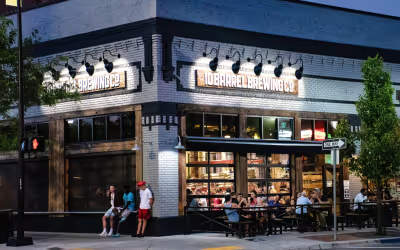
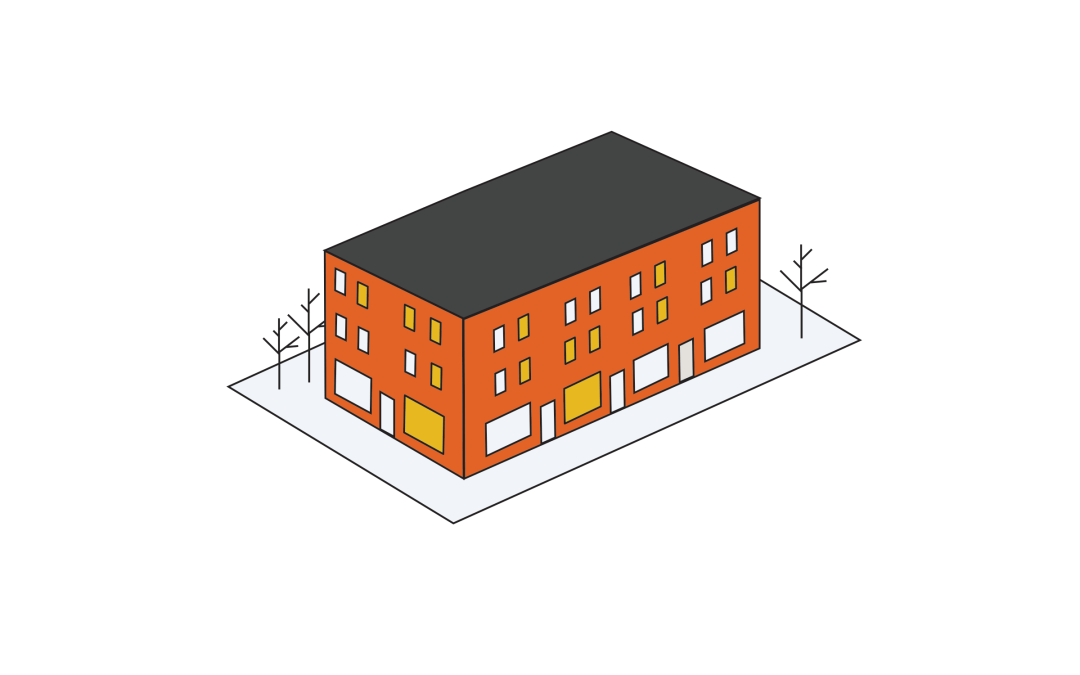
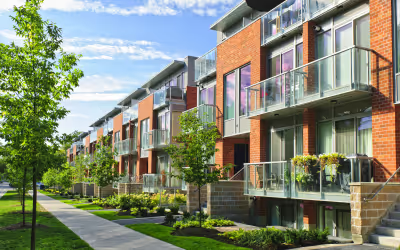
The CN zone is designed to encourage smaller-scale commercial activities while allowing for some mixed-use projects. Picture a lively corner café with offices or apartments above it—that's the kind of vibrant, community-focused development that the CN zone supports. However, it's important to know that buildings in this zone can't be entirely residential, and unlike the MUN (Neighbourhood Mixed Use) zone, residential units aren't allowed on the ground floor.
Development Types & Commercial Uses
Whether you're envisioning a local coffee shop, a boutique health clinic, or a small office space, the CN zone has you covered. It also accommodates community-oriented spaces like daycares, libraries, and even recreation facilities.
Maximum commercial space depends on your location:
- On local roads, the maximum bay size is 500 m².
- Abutting collector or arterial roads, the maximum size jumps to 1,000 m².
- On sites larger than one hectare along arterial roads, you're looking at 2,500 m².
Height and Floor Area Ratio (FAR)
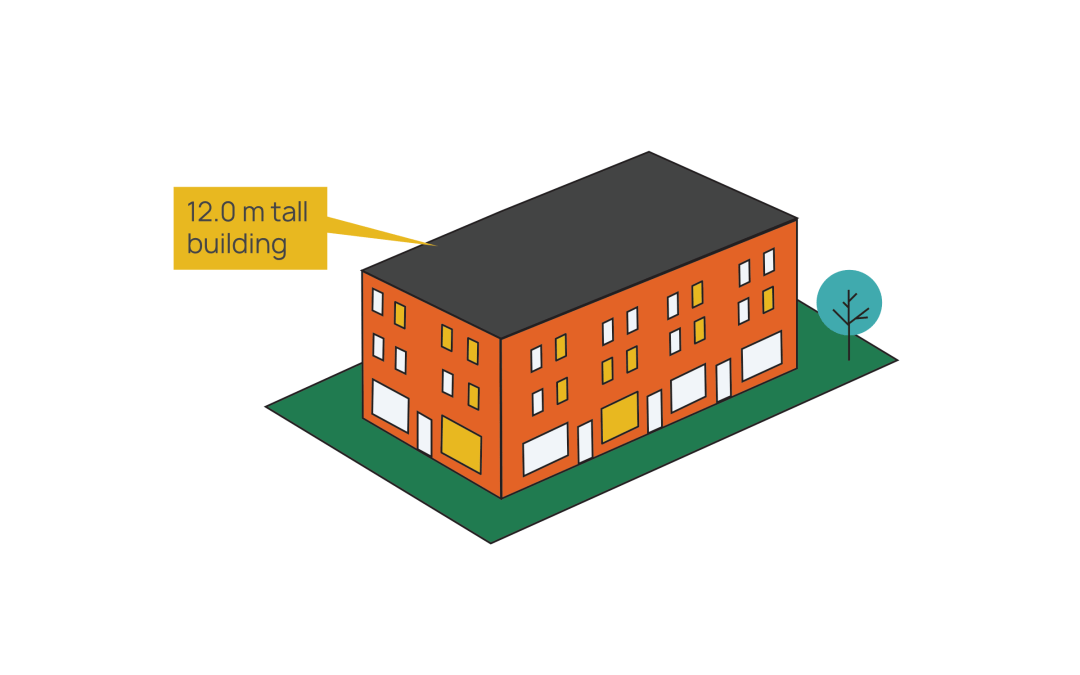
The CN zone allows buildings up to 12.0 metres (typically enough for three storeys). Unlike the MUN zone, there's no minimum ground floor height requirement, giving you more flexibility in your building design. However, keep in mind that the City's planners can't grant variances on height—12.0 metres is as high as you can go unless you decide to pursue an appeal.
The CN zone has a maximum 2.0 floor area ratio (FAR), which means your building's total floor area can be up to twice the size of your lot. For example, if your lot is 1,600 m², your maximum building area would be 3,200 m². Remember, though, other factors like height and setbacks might limit how much you can actually build.
Setbacks
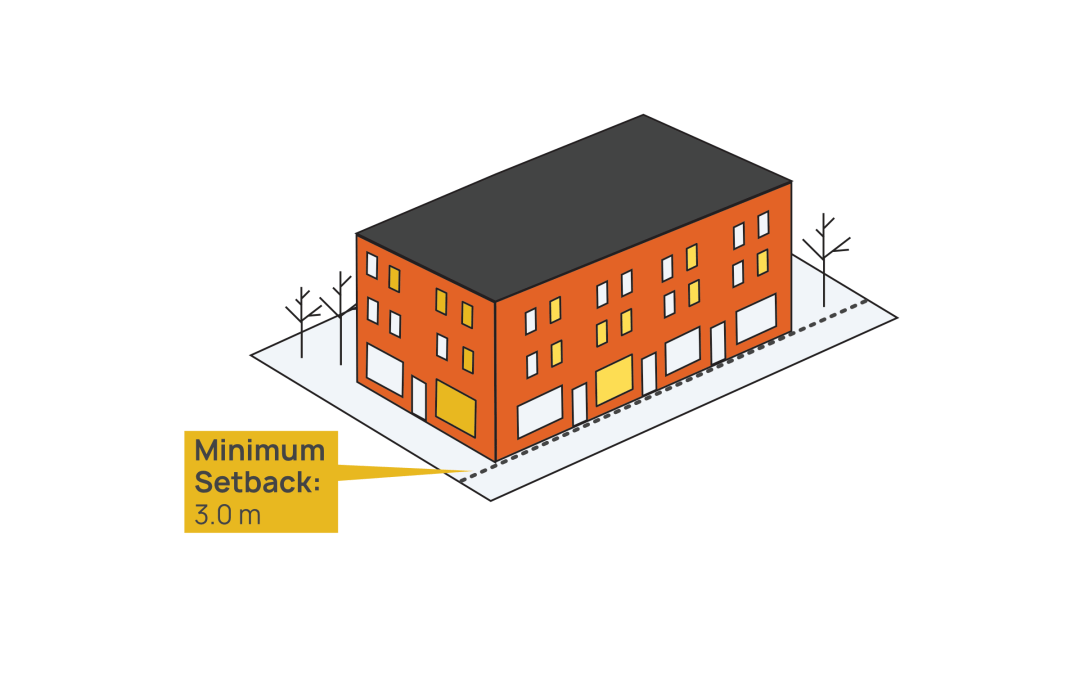
Setbacks in the CN zone are designed to balance building massing, pedestrian accessibility, and streetscape aesthetics. Here's what you need to know:
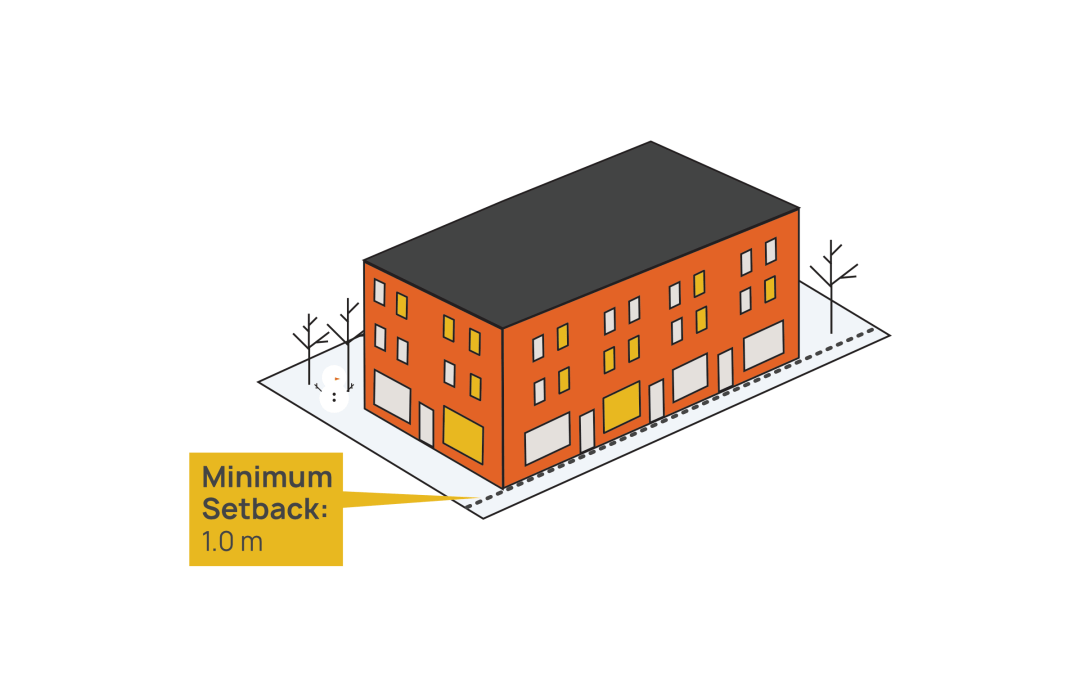
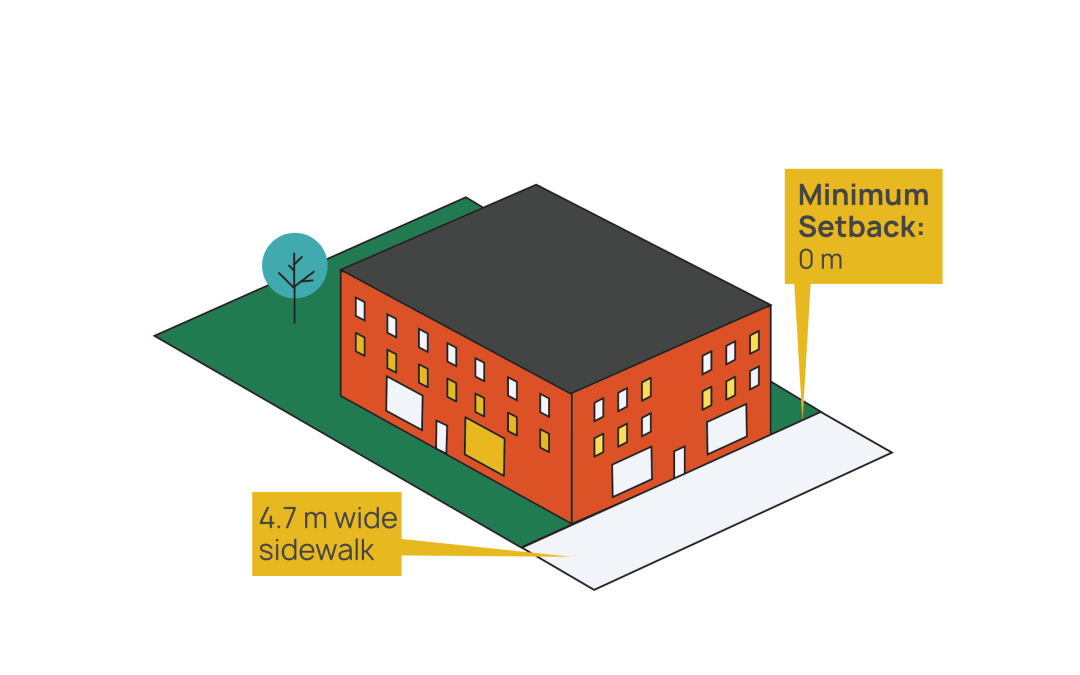
- Minimum setback from a street is typically 3.0 metres, but there are exceptions:
- For main street developments, the setback can be reduced to 1.0 metre to promote a more pedestrian-friendly environment.
- If the lot line abuts a 4.7 metre-wide sidewalk, you don't need a setback at all.
- No setback is required from alleys in most cases, except if the alley is narrower than 6.0 metres—in which case, a 1.0 metre setback is needed.
- When it comes to setbacks from adjacent sites:
- The standard setback is 3.0 metres, but if your property borders a site zoned MUN, a property zoned MU with a commercial frontage modifier, a vacant site in the MU zone, or a commercial zone, no setback is required.
- For properties adjacent to a residential zone, you must maintain the 3.0 metre setback.
These flexible setbacks provide options for creative design while supporting active streetfronts and maintaining harmony with surrounding developments.
Driveways, Parking, and Landscaping
Unlike the mixed use zones, the CN zone allows drive-throughs, but there are some conditions. Vehicle access has to come from the rear alley if one exists. If not, corner lots can use side street access to minimize traffic disruptions.
Landscaping is also a must for new developments, and you have to have one tree and two shrubs for every 30 m² of setback area. These green touches help maintain a welcoming atmosphere.
Amenity Area
If your development includes more than eight residential units, you'll need to provide at least 7.5 square metres of amenity space per unit. Whether it's a rooftop terrace, a shared garden, or private balconies, these spaces make a difference in creating liveable, attractive environments for residents.
Conclusion
We hope this breakdown of the CN zone gives you a better sense of what's possible under Edmonton's updated zoning framework. If you're looking to unlock your property's potential, a detailed Development Strategy Report can go a long way. Our team at Situate specializes in helping you navigate these complexities, ensuring your project aligns with city regulations and maximizes value.
Whether you're thinking of a commercial project or a mixed-use development, we're here to help you make the most of your property. Let's connect and explore how we can turn your vision into reality!
Let’s Talk About Your Project
Curious how this could apply to your situation? Let’s have a quick conversation and explore what’s possible.
If You’re Building More Housing, You Deserve a Smooth Approval
Our cities need more housing, and we don’t think anything should stand in the way. Book a call and let’s map the fastest path to yes.