What Can I Do in Edmonton's CG Zone?
November 8, 2024

Introduction
Edmonton’s new Zoning Bylaw 20001 came into effect in January 2024. If you’re still wrapping your head around what these changes mean for your property, you’re not alone. We still receive plenty of questions about the new zones, even the CG (General Commercial) zone, which has replaced the old CSC (Shopping Centre) and CB2 (General Business) zones outside Edmonton’s main streets.
The CG zone is one of three commercial zones introduced under Zoning Bylaw 20001, offering a mid-range level of development intensity that caters to a wide range of commercial and mixed-use projects.
Let’s dive into what’s new, what you can build, and how the General Commercial zone could unlock exciting possibilities for your next development.
What Can I Do Under Edmonton’s CG Zoning?
The CG zone was created to allow a wide range of development options—from smaller commercial and office spaces to larger shopping centres and mixed-use developments. Whether you’re looking to develop a commercial plaza, an office building, or a mix of shops and residential units, the CG zone provides a lot of flexibility.
However, it’s important to note that buildings containing only residential uses aren’t allowed here—dwellings are only permitted above main floor commercial spaces.
But let’s dig deeper to see what that actually means for your property.
Development Types
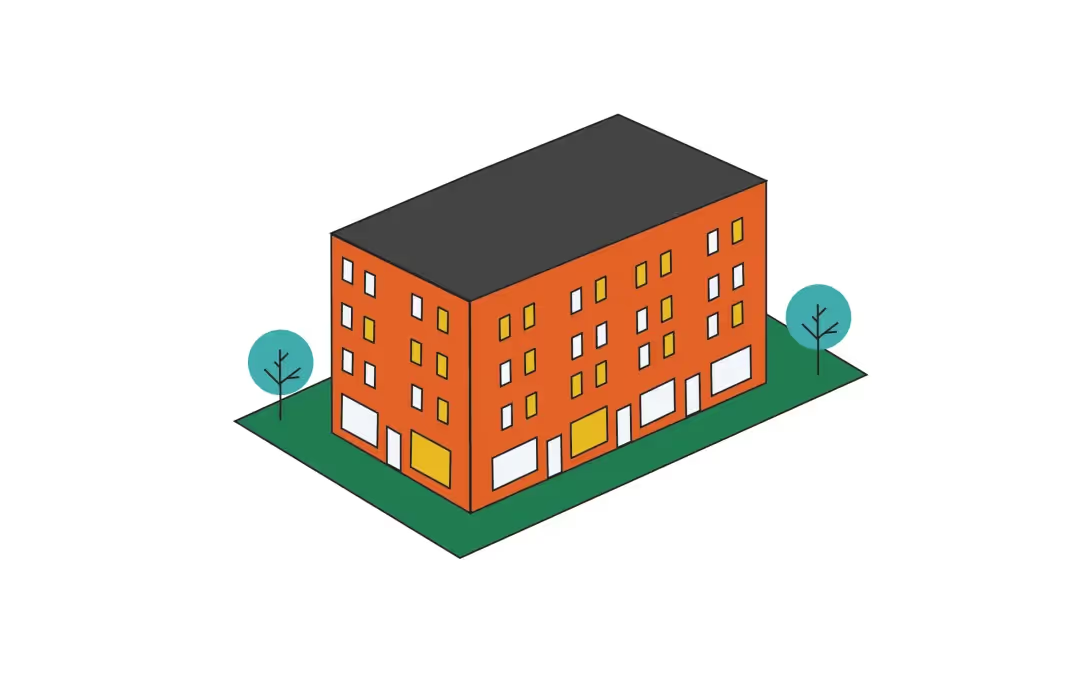
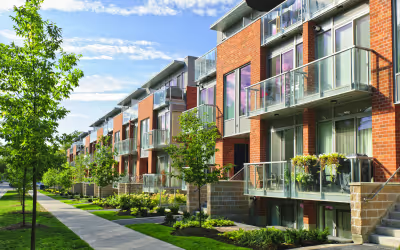
The CG zone is designed to accommodate everything from small local businesses to large-scale commercial hubs. You can develop mixed-use buildings, where the ground floor features shops, cafes, or offices, while upper floors house residential units. This approach keeps the streets lively and creates vibrant, community-focused spaces.
However, unlike the MU (Mixed Use) zone, residential units are not permitted on the ground floor. If you’re planning a project that combines both commercial and residential uses, the CG zone allows flexibility, but only with residential units above street level.
Commercial Uses
Wondering what kinds of businesses you can set up in a CG zone? Here’s the rundown:
- Restaurants, cafes, bars, and retail shops
- Health services, offices, and hotels
- Daycares, schools, and community centres
- Recreation facilities and libraries
Height and Floor Area Ratio (FAR)
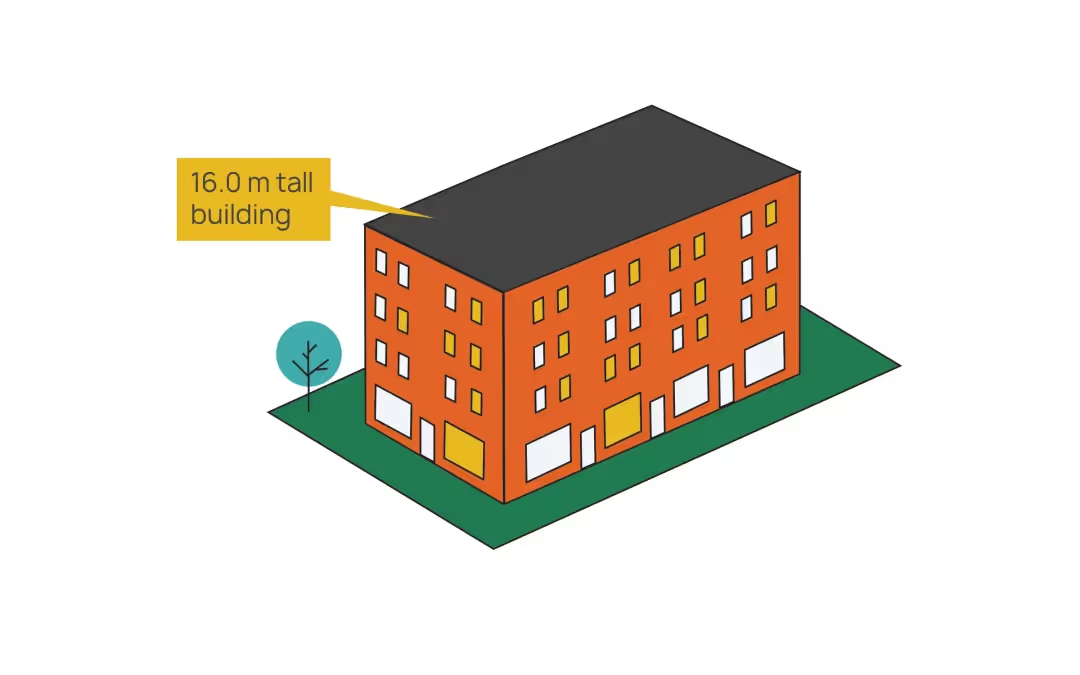
The CG zone allows for buildings up to 16.0 metres high, or about four storeys. This is great if you’re looking to add a bit more height to your project compared to the CN (Neighbourhood Commercial) zone, which caps out at 12.0 metres. However, keep in mind that development planners can’t grant variances on height limits—you’ll need to stick to 16.0 metres unless you’re willing to go through the appeal process.
As for the Floor Area Ratio (FAR), the CG zone offers a generous maximum FAR of 3.5, giving you flexibility in how you use your space. In simple terms, if you have a lot that’s 1,600 m², you could build up to 5,600 m² of total floor space. But remember, other factors like height limits and setbacks might restrict your total buildable area, so make sure to plan out and consider your site plan scenarios carefully (or hire us to help you).
Setbacks
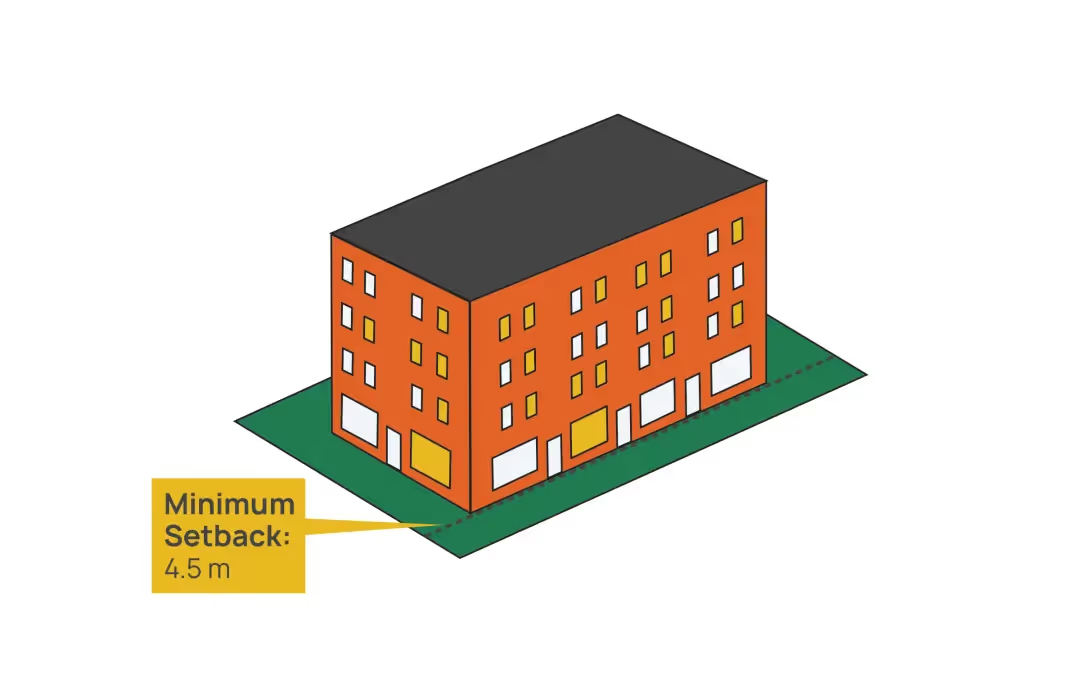
Setbacks in the CG zone determine how close your building can be to property lines and roads:
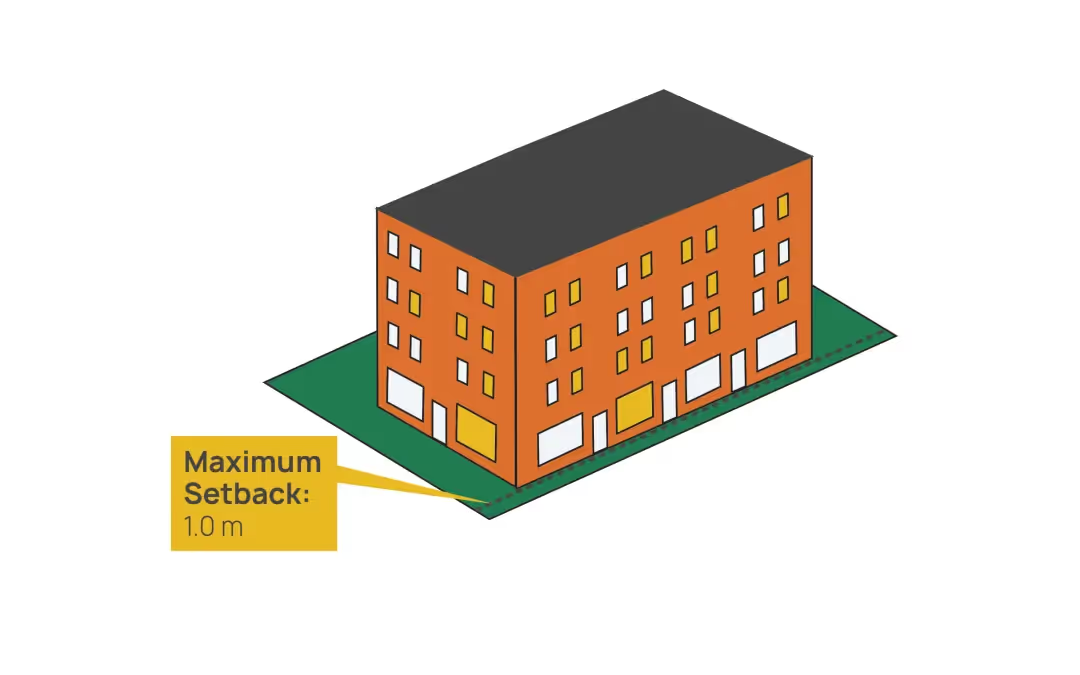
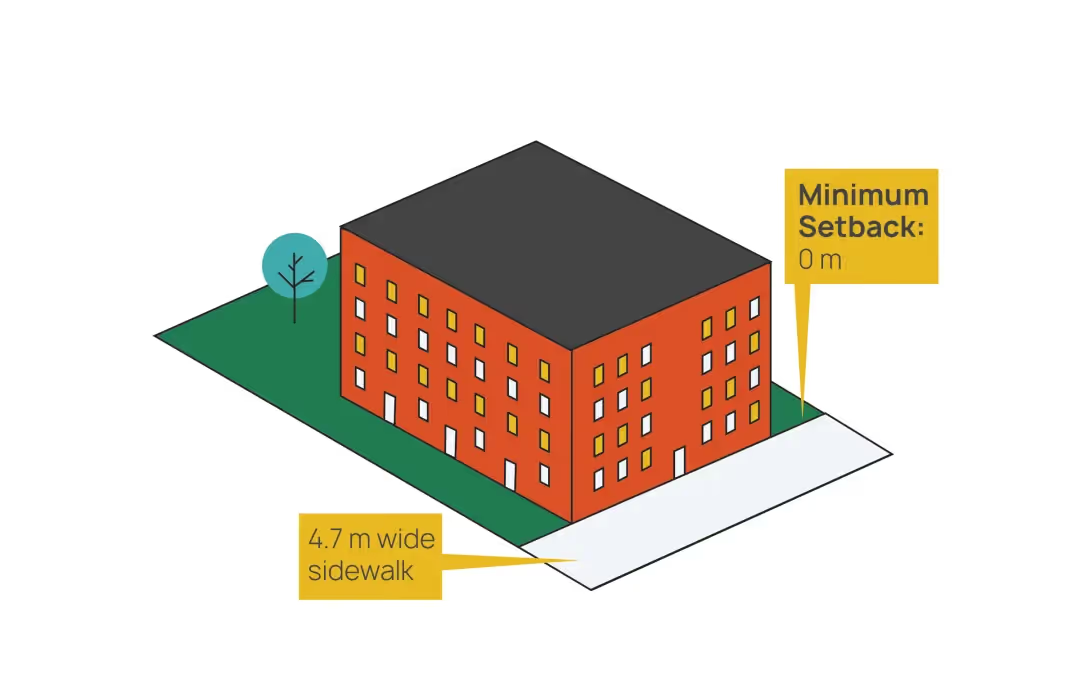
- The minimum setback from a street is 4.5 metres, except:
- The setback is only 1.0 metre if the building is part of a “main street” development.
- There’s no setback required if there’s an abutting sidewalk that’s at least 4.7 metres wide.
- The minimum setback becomes 6.0 metres if the building is abutting an arterial road.
- There’s no minimum setback from an alley, except that portions of a hotel over 23.0 metres in height have to be set back 3.0 metres.
- There’s also no minimum setback from another site, except:
- The minimum setback from a site zoned for parks is 3.0 metres.
- The minimum setback from a site zoned MU, without a commercial frontage modifier, is 3.0 metres.
- The minimum setback from a residential zone is 6.0 metres.
Driveways, Parking, and Landscaping
Unlike other zones, the CG zone offers flexibility in how you manage access to your property. You can have driveways facing the street—even if there’s an alley behind your site. Plus, drive-throughs are allowed on larger corner sites along arterial roads, as long as they don’t interfere with pedestrian access.
Don’t forget about landscaping! For every 30 m² of setback area, you’ll need to plant one tree and two shrubs to create a welcoming environment.
Conclusion
We hope this breakdown of the CG zone has made it easier to understand how you can make the most of your property. Whether you’re planning a new commercial development or a mixed-use project, the CG zone offers plenty of opportunities to get creative. If you need help navigating the specifics—or figuring out how to get the most out of your site—our team at Situate is here to guide you through the process.
If you’re looking at rezoning to develop something that fits the CG zone, or just need a hand with planning approvals, reach out to us today for a free consultation. Let’s unlock the potential of your next project!
Let’s Talk About Your Project
Curious how this could apply to your situation? Let’s have a quick conversation and explore what’s possible.
If You’re Building More Housing, You Deserve a Smooth Approval
Our cities need more housing, and we don’t think anything should stand in the way. Book a call and let’s map the fastest path to yes.