Old Buildings, New Life: Adaptive Reuse and Heritage Designation in Edmonton
December 11, 2024
Introduction
When it comes to transforming Edmonton’s older buildings into modern, functional spaces, adaptive reuse is the name of the game. It’s all about taking something old—like a historic warehouse, a vintage school, or a forgotten gym—and giving it a fresh purpose, all while keeping its character intact. Edmonton has a treasure trove of older buildings waiting to be reimagined, and the opportunities are endless.
But there’s a catch. In Edmonton, adaptive reuse projects often come with the added complexity of rezoning requirements and, sometimes, heritage designation. Understanding how these processes interact can make or break your project. Let’s break it down.
What is Adaptive Reuse?
Adaptive reuse is the practice of repurposing an existing structure for a use other than the one it was originally built for. It’s a sustainable, community-friendly approach to development that preserves the history and character of a neighborhood while meeting modern needs.
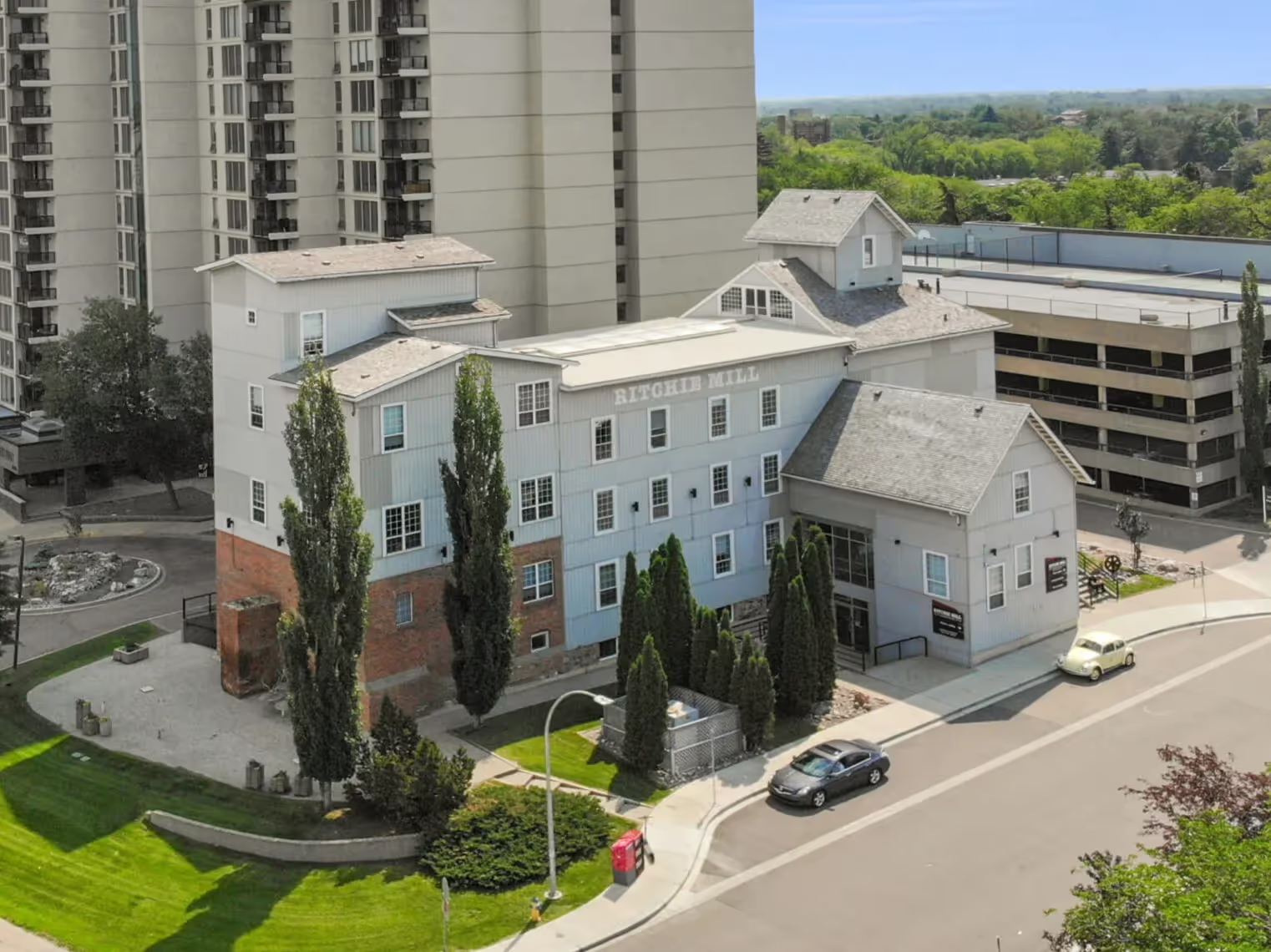
In Edmonton, you’ll find some great examples of adaptive reuse in action: old churches turned into loft apartments, former factories converted into creative office spaces, and historic schools repurposed as community hubs. These projects breathe new life into the city while honoring its past.
The Role of Rezoning in Adaptive Reuse
Here’s where things get interesting. If you’re looking to repurpose a building, the first question to ask is: Does the current zoning permit the intended use? More often than not, the answer is no, especially when it comes to older buildings that were built under outdated zoning frameworks.
For example, a former industrial building might be zoned for manufacturing use, but you want to convert it into residential lofts or office space. To do that legally, you’ll need to rezone the property. This means applying to the City of Edmonton to change the land use designation to one that permits your intended use.
Heritage Designation: An Added Layer of Complexity
For some buildings, adaptive reuse intersects with heritage designation. Edmonton’s Municipal Heritage Inventory includes buildings that have been recognized for their historical or architectural significance. If a building on your radar is on this list or if it’s in an area with historical significance, heritage designation could come into play.
Heritage designation can be both an asset and a challenge. On the one hand, it can unlock financial incentives and grants to help fund your project. On the other hand, it adds a layer of regulatory requirements that can slow down the development process and restrict what changes can be made to the building.
Why Rezoning Should Come First
Here’s a practical tip: If you’re considering both rezoning and heritage designation for your adaptive reuse project, start with rezoning. Why? Because rezoning determines the “what” and “how” of your project, while heritage designation focuses on the “how” of preservation.
By getting rezoning in place first, you can:
- Confirm project viability before committing to heritage designation costs and timeline.
- Streamline the designation process by knowing what the building will be used for.
Here are some additional reasons to rezone before pursuing heritage designation:
- Project Viability and Investment Risk: Heritage designation involves a thorough study of the building’s character-defining features, which takes time and money. Rezoning first allows developers to determine project viability before investing heavily in the designation process.
- Smoother Designation Process: Once rezoning is complete, the designation process can focus solely on preservation, ensuring the building’s historical elements are protected without the added uncertainty of land-use approvals.
- Community and Council Benefits: A rezoning-first approach aligns development plans with Edmonton’s city-building goals early in the process.
The Step-by-Step Process
Step 1: Assess the Building’s Potential
The first step is to determine whether the building is suitable for the intended future use. This involves two parallel explorations:
- Development Strategy Report and Rezoning Initiation: Analyze the current zoning to see if it permits the desired uses, and initiate the rezoning process if needed to align with the adaptive reuse vision.
- Eligibility for the Heritage Inventory: Explore whether the building qualifies for listing on the Municipal Heritage Inventory, which is the first step toward potential designation and financial incentives.
This step ensures that developers have a clear understanding of what is possible under zoning and whether pursuing heritage designation is worth the investment.
Step 2: Complete Rezoning
Once rezoning is complete, the developer has a choice:
- Adaptive Reuse Without Designation: Proceed directly with design and permit applications for the adaptive reuse project without pursuing heritage designation. This approach allows for greater flexibility while retaining the option for designation in the future.
- Adaptive Reuse With Designation: Move forward with the heritage designation pathway by pursuing inventory listing, council approval for designation, and preserving character-defining features.
Step 3: Heritage Designation (Optional)
If the developer chooses to pursue heritage designation, this step involves formally designating the building as a Municipal Historic Resource (MHR). This is a collaborative process between the developer and the City of Edmonton, involving:
- Inventory listing review and approval.
- Identifying character-defining features (CDFs) that must be preserved.
- Entering into a Heritage Conservation Agreement (HCA) with the City.
- Accessing rehabilitation grants or incentives tied to the designation.
Step 4: Design and Permits
With rezoning (and possibly designation) complete, the design and permit phase can begin in earnest. This involves:
- Developing detailed plans for the adaptive reuse project.
- Applying for Development Permits and Building Permits.
- Ensuring compliance with the Heritage Conservation Agreement (if applicable) to preserve CDFs while meeting modern standards.
Step 5: Construction
The final step is construction, where the plans become reality. For designated buildings, construction must align with the terms of the Heritage Conservation Agreement, preserving key features while adapting the space to its new use.
Financial Incentives for Heritage Designation
If you’re on the fence about heritage designation, it’s worth considering the financial perks. Edmonton offers several incentives for developers who choose to designate their buildings:
- Rehabilitation Grants: Up to 50% of approved rehabilitation costs (capped at $200,000 per year) for Municipal Historic Resources.
- Tax Incentives: Some heritage properties may qualify for reduced property taxes.
- Federal and Provincial Programs: Additional funding may be available through programs like the Canada Mortgage and Housing Corporation (CMHC) or Alberta’s Historic Places Initiative.
Balancing Preservation and Development
One of the biggest challenges in adaptive reuse projects is striking the right balance between preservation and development. Heritage designation protects character-defining features, but it doesn’t mean the building can’t be modernized. The key is to work collaboratively with the City of Edmonton’s heritage team to find solutions that honor the building’s history while meeting your development goals.
For example, you might preserve the original brick façade of a historic warehouse while completely redesigning the interior to meet modern standards. Or you might maintain the original windows and roofline of a vintage school while adding a modern addition to increase floor area.
Why Adaptive Reuse is a Win-Win
Adaptive reuse is more than just a development strategy—it’s a way to give back to the community. By preserving Edmonton’s architectural heritage, you’re helping to maintain the character and identity of the city’s neighborhoods. At the same time, you’re creating new opportunities for residents, businesses, and the community as a whole.
From a financial perspective, adaptive reuse can also be a smart investment. Older buildings often come with lower land costs, and the combination of rezoning and heritage incentives can make these projects surprisingly cost-effective. Plus, there’s a growing market demand for heritage properties, especially among businesses and residents who value character and authenticity.
Call to Action: Let’s Build Edmonton’s Future Together
At Situate, we’re here to guide you through every step of the adaptive reuse journey, from our Development Strategy Reports and rezoning to navigating the heritage designation process. Ready to transform your vision into reality? Reach out to us today for expert support tailored to your project’s unique goals. Together, let’s preserve Edmonton’s past while building its future!
Let’s Talk About Your Project
Curious how this could apply to your situation? Let’s have a quick conversation and explore what’s possible.
If You’re Building More Housing, You Deserve a Smooth Approval
Our cities need more housing, and we don’t think anything should stand in the way. Book a call and let’s map the fastest path to yes.